How AR and VR are Shaping the Future of Training and Education
Introduction
Augmented Reality (AR) and Virtual Reality (VR) are rapidly transforming various sectors, and education is no exception. These immersive technologies are redefining traditional teaching methods, offering new ways to engage learners, simulate real-world experiences, and enhance knowledge retention. As the global education landscape evolves, AR and VR are becoming essential tools for educators, trainers, and institutions seeking to prepare students for the demands of the modern world. This article explores how AR and VR are shaping the future of training and education, highlighting their applications, benefits, challenges, and future prospects.
Understanding AR and VR
Before delving into their applications in education, it’s crucial to understand the difference between Augmented Reality and Virtual Reality.
Augmented Reality (AR)
AR overlays digital information—such as images, videos, and animations—onto the real world. This enhancement allows users to interact with both real and virtual elements simultaneously. AR can be accessed through devices like smartphones, tablets, and AR glasses, enabling users to see the digital content integrated into their physical environment.
Virtual Reality (VR)
VR, on the other hand, immerses users in a completely virtual environment, isolating them from the real world. This immersive experience is typically facilitated through VR headsets, which provide 360-degree views and sensory feedback. Users can interact with the virtual environment, making it ideal for simulations and experiential learning.
Applications of AR and VR in Education
1. Immersive Learning Environments
AR and VR create immersive learning experiences that can enhance student engagement and motivation. By simulating real-world scenarios, these technologies allow students to learn by doing rather than just reading or listening.
For example, medical students can use VR simulations to practice surgical techniques in a risk-free environment. Programs like Osso VR provide realistic training modules that allow aspiring surgeons to hone their skills before entering the operating room. Similarly, AR applications can overlay anatomical structures on physical models, giving students a deeper understanding of human anatomy.
2. Enhanced Visualization of Complex Concepts
Many subjects, such as science, mathematics, and engineering, involve complex concepts that can be challenging to grasp. AR and VR can simplify these concepts through interactive visualizations.
In chemistry, for instance, AR can help students visualize molecular structures and chemical reactions in three dimensions. By manipulating these models, students can gain a better understanding of molecular interactions and properties. VR can facilitate similar experiences, allowing students to explore chemical compounds in immersive environments.
3. Remote Learning and Collaboration
The COVID-19 pandemic accelerated the adoption of online learning, but many students missed the collaborative and interactive elements of traditional classrooms. AR and VR can bridge this gap by creating virtual classrooms where students can interact with their peers and instructors.
For example, platforms like Engage and Spatial enable virtual classrooms where students can participate in discussions, collaborate on projects, and attend lectures as if they were in a physical classroom. This immersive experience can foster a sense of community and enhance the overall learning experience.
4. Skill Development and Vocational Training
Vocational training often requires hands-on experience that can be difficult to replicate in traditional classroom settings. AR and VR provide a safe and effective way to develop practical skills.
In fields like manufacturing, construction, and healthcare, trainees can use VR simulations to practice techniques and procedures in a controlled environment. For instance, AR applications can guide technicians through complex machinery repairs by overlaying instructions and diagrams on the equipment itself. This immediate feedback helps learners master skills more effectively.
5. Historical and Cultural Education
AR and VR can also enhance the study of history and culture by providing immersive experiences that bring historical events and artifacts to life. Students can virtually visit historical sites, museums, and cultural landmarks, gaining insights that go beyond traditional textbooks.
For example, VR experiences can transport students to ancient civilizations, allowing them to explore reconstructed environments and interact with virtual historical figures. AR applications can enhance museum visits by providing additional information and context about exhibits through interactive displays.
6. Language Learning
Language acquisition benefits significantly from immersive experiences. VR can create scenarios where learners practice speaking and listening skills in context. Simulated environments can place students in everyday situations, such as ordering food in a restaurant or negotiating in a business setting.
AR can support language learning by providing real-time translations and context-aware vocabulary prompts. For instance, learners can point their devices at objects to receive translations and pronunciation guides, making vocabulary acquisition more engaging and interactive.
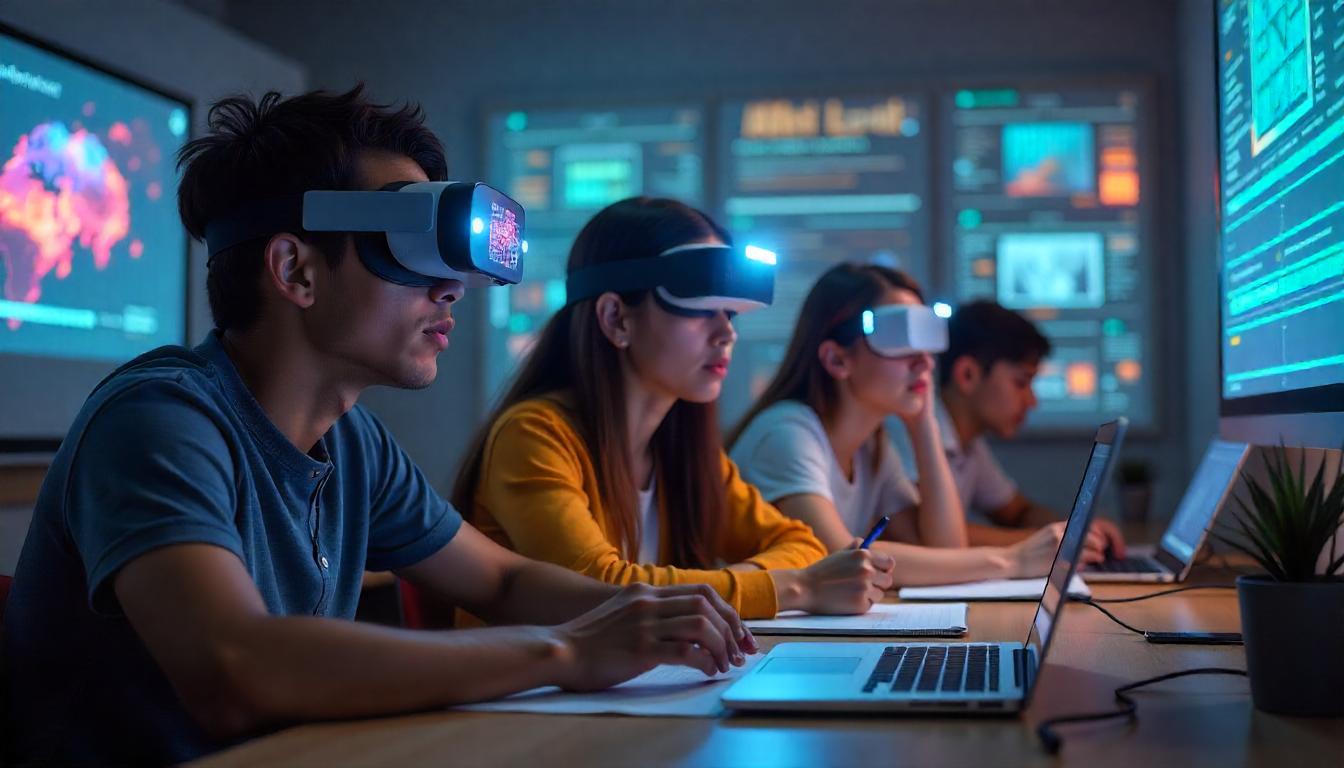
Benefits of AR and VR in Education
1. Increased Engagement and Motivation
The interactive nature of AR and VR captivates students’ attention, making learning more engaging. When students can actively participate in their education, they are more likely to retain information and develop a deeper understanding of the subject matter.
2. Enhanced Retention of Knowledge
Studies have shown that experiential learning improves knowledge retention compared to traditional methods. AR and VR allow students to visualize and practice concepts in real-world contexts, leading to better long-term retention of information.
3. Personalized Learning Experiences
AR and VR can be tailored to meet individual learning needs. Educators can create custom scenarios that address specific learning objectives, allowing students to progress at their own pace. This personalization can accommodate diverse learning styles and preferences.
4. Accessibility and Inclusivity
AR and VR can enhance accessibility for students with disabilities. For instance, VR can provide alternative methods for students with mobility challenges to participate in hands-on training. AR can help students with visual impairments by providing audio descriptions and tactile feedback.
5. Cost-Effectiveness
While the initial investment in AR and VR technology can be significant, these tools can ultimately save costs in the long run. By reducing the need for physical materials, travel, and in-person training sessions, educational institutions can streamline their operations and allocate resources more effectively.
Challenges in Implementing AR and VR in Education
1. High Initial Costs
The implementation of AR and VR technology often requires substantial upfront investment in hardware, software, and training. Educational institutions may struggle to justify these costs, particularly when budgets are tight.
2. Technical Limitations
Not all students have access to the necessary devices or high-speed internet connections required for AR and VR applications. This digital divide can exacerbate existing inequalities in education, limiting the effectiveness of these technologies.
3. Resistance to Change
Educators may be hesitant to adopt new technologies due to a lack of familiarity or fear of the unknown. Professional development and training programs are essential to help teachers integrate AR and VR into their curricula effectively.
4. Content Development
Creating high-quality AR and VR content requires specialized skills and resources. Educational institutions may need to collaborate with technology companies or invest in training their staff to develop effective learning experiences.
5. Safety and Privacy Concerns
As with any technology that collects user data, safety and privacy concerns are paramount. Institutions must ensure that student data is protected and that immersive experiences do not pose any physical risks to users.
Future Prospects of AR and VR in Education
1. Continuous Advancements in Technology
As AR and VR technologies continue to evolve, we can expect enhanced capabilities and improved user experiences. Developments in graphics, haptics, and AI will lead to more realistic and interactive learning environments.
2. Increased Adoption in Various Educational Settings
AR and VR are likely to see broader adoption across diverse educational settings, from K-12 schools to higher education and corporate training programs. As awareness of the benefits grows, more institutions will seek to integrate these technologies into their curricula.
3. Expansion of Collaborative Learning Experiences
The future of AR and VR in education will likely focus on fostering collaborative learning experiences. Virtual environments will enable students from different locations to work together on projects, engage in discussions, and learn from one another, promoting a global learning community.
4. Integration with Artificial Intelligence
The integration of AI with AR and VR has the potential to create highly personalized learning experiences. AI algorithms can analyze student interactions and adapt content in real-time, ensuring that learners receive the support they need to succeed.
5. Lifelong Learning and Professional Development
AR and VR can play a significant role in lifelong learning and professional development. As industries continue to evolve, professionals will need to acquire new skills and knowledge. AR and VR can provide flexible and engaging training solutions that cater to adult learners.
Conclusion
AR and VR technologies are undeniably shaping the future of training and education. By offering immersive, interactive, and engaging learning experiences, these tools are transforming how students acquire knowledge and develop skills. Despite challenges such as high costs and technical limitations, the benefits of AR and VR in education are too significant to ignore.
As we move forward, it is essential for educators, institutions, and policymakers to embrace