The Rise of 5G: What It Means for IoT and Smart Cities
The Rise of 5G: What It Means for IoT and Smart Cities
The rollout of 5G technology is set to be a game-changer, not just for mobile connectivity but also for the Internet of Things (IoT) and the development of smart cities. With its high-speed data transfer, ultra-low latency, and massive connectivity potential, 5G is poised to accelerate the digital transformation of urban areas, making cities more efficient, sustainable, and livable. The convergence of 5G and IoT will unlock new possibilities for everything from smart traffic management to real-time environmental monitoring and enhanced public safety.
In this article, we explore how the rise of 5G will impact the IoT ecosystem and drive the future of smart cities.
1. Understanding 5G: What Makes It Different?
5G, the fifth generation of wireless technology, brings significant improvements over its predecessor, 4G LTE. It is designed to deliver three key benefits:
- Higher Speeds: 5G can offer speeds up to 100 times faster than 4G, enabling rapid data transfer and seamless real-time communication. This speed allows for more complex and data-intensive IoT applications, from HD video streaming to advanced AI-powered analytics.
- Ultra-Low Latency: Latency refers to the time it takes for data to travel between devices. With 5G, latency can be reduced to as little as 1 millisecond, making near-instantaneous responses possible. This is crucial for applications like autonomous vehicles, remote surgery, and industrial automation, where split-second decisions are necessary.
- Massive Connectivity: 5G is designed to support a massive number of devices simultaneously—up to one million devices per square kilometer. This level of connectivity is essential for the rapidly growing IoT ecosystem, where billions of devices, sensors, and machines are expected to be interconnected.
These capabilities make 5G a foundational technology for IoT and smart cities, enabling applications that were previously impossible or impractical.
2. 5G and the Internet of Things (IoT)
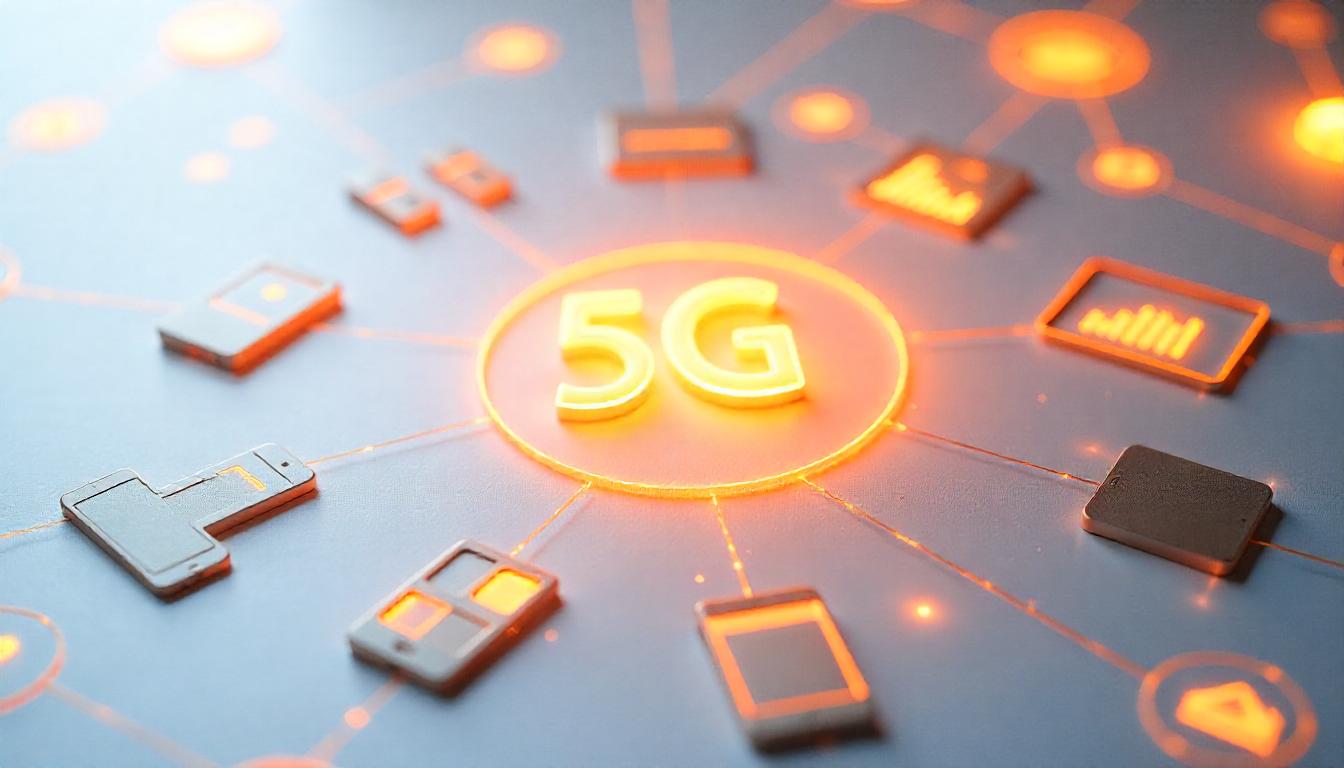
IoT refers to the network of physical devices—ranging from home appliances to industrial machines—that are embedded with sensors, software, and other technologies to connect and exchange data. The rise of 5G will significantly enhance the performance, scale, and capabilities of IoT systems.
Seamless Connectivity for IoT Devices
With 5G, IoT devices will benefit from faster data transmission, lower latency, and more reliable connections. This is particularly important for applications that require real-time data exchange and remote monitoring, such as smart factories, connected vehicles, and healthcare devices. For instance, wearable health monitors will be able to transmit real-time data to healthcare providers with minimal delay, allowing for better patient care and faster response times in emergencies.
In industrial settings, 5G-enabled IoT systems will allow factories to run more efficiently. Machines equipped with sensors can monitor their own performance and predict when maintenance is needed, reducing downtime and improving productivity. 5G’s capacity to handle a vast number of connected devices means that entire supply chains—from raw materials to finished products—can be monitored and optimized in real-time.
Edge Computing and 5G-Enhanced IoT
Edge computing, where data is processed closer to where it is generated rather than in a distant cloud, is another area that will benefit from 5G. By combining edge computing with 5G, IoT devices can process and analyze data locally, enabling faster decision-making and reducing the need for constant communication with a central server. This is particularly valuable for critical applications such as autonomous vehicles, where decisions must be made in real time without delays caused by cloud processing.
For example, in smart factories or autonomous vehicles, 5G-enabled edge computing can enable real-time analytics and control. Machines or vehicles can make immediate decisions based on local data processing, without having to rely on a distant cloud for analysis. This reduces latency and enhances efficiency in high-stakes environments.
3. 5G and Smart Cities: Enabling Urban Transformation
The integration of 5G into smart cities will have a profound impact on how urban environments function, making them more intelligent, efficient, and responsive to the needs of residents. Here are some key areas where 5G will drive the development of smart cities:
Smart Traffic Management
One of the most significant challenges in urban areas is traffic congestion. With 5G, smart cities will be able to deploy connected traffic systems that monitor traffic flow in real-time and optimize traffic signals to reduce congestion. Connected vehicles will communicate with traffic lights, road sensors, and other vehicles, allowing for smoother traffic flow and safer road conditions.
Public Safety and Emergency Response
5G will enhance public safety by enabling faster and more effective communication between emergency responders and city infrastructure. For example, smart surveillance cameras equipped with AI can analyze video footage in real-time to detect suspicious activity or identify emergencies, such as a fire or accident, and alert authorities immediately.
Energy and Environmental Monitoring
Smart cities are increasingly focused on sustainability, and 5G will play a crucial role in managing urban energy use and environmental monitoring. Smart grids, powered by 5G, will allow for real-time monitoring and management of energy consumption across the city. IoT sensors can collect data on electricity usage, weather conditions, and energy demand, allowing utility providers to optimize energy distribution and reduce waste.
Smart Buildings and Infrastructure
Buildings in smart cities will increasingly rely on 5G-powered IoT systems to enhance energy efficiency, security, and convenience. Sensors embedded in buildings can monitor energy usage, lighting, and temperature, adjusting these factors in real-time to reduce waste and optimize comfort for occupants.
4. Challenges and Considerations for 5G and Smart Cities
While the potential for 5G to transform IoT and smart cities is vast, there are several challenges and considerations to keep in mind:
Infrastructure Costs and Deployment
The rollout of 5G requires significant investment in infrastructure, including the installation of new 5G base stations and small cells throughout cities. Unlike 4G, which relies on large cell towers, 5G networks require a denser network of small cells to provide the necessary coverage and capacity. This can be a costly and complex process, especially in densely populated urban areas where space is limited.
Data Privacy and Security
As more devices and systems become interconnected via 5G, concerns about data privacy and security will grow. The massive amount of data generated by IoT devices and smart city systems could become a target for cyberattacks. Ensuring that these systems are secure and that data is protected from unauthorized access will be a major challenge for cities and service providers.
5. The Future of 5G, IoT, and Smart Cities
The rise of 5G is just the beginning of a new era for IoT and smart cities. As 5G networks expand and mature, we will see an acceleration in the development of smart urban technologies that improve quality of life, enhance sustainability, and create more resilient city infrastructures.
Conclusion
The rise of 5G is set to revolutionize the IoT ecosystem and pave the way for the development of smart cities. With its high-speed, low-latency, and massive connectivity capabilities, 5G will enable new applications and services that improve urban living, enhance public safety, and promote sustainability. While there are challenges to overcome, the future of 5G-powered IoT and smart cities holds immense potential for transforming how cities operate and how people interact with their urban environments.