

5G and the Rise of Smart Manufacturing
5G and the Rise of Smart Manufacturing
The rise of 5G technology is transforming industries globally, and one of the most impacted sectors is manufacturing. As companies seek to modernize and embrace Industry 4.0, smart manufacturing has emerged as a pivotal trend. Smart manufacturing leverages advanced technologies such as the Internet of Things (IoT), Artificial Intelligence (AI), robotics, and automation to create more efficient, agile, and responsive production systems. At the core of this transformation is 5G, the next generation of wireless communication technology, which provides the speed, low latency, and reliability necessary to power these cutting-edge manufacturing systems.
In this article, we explore how 5G is enabling smart manufacturing, its benefits, and the challenges industries face in integrating this transformative technology. As factories become more connected and intelligent, 5G is playing a central role in enabling the future of manufacturing.
Understanding 5G and Its Impact on Manufacturing
5G is the fifth generation of wireless network technology, offering faster speeds, greater capacity, ultra-low latency, and enhanced connectivity compared to previous generations (such as 4G LTE). While 4G revolutionized mobile communications by supporting applications like video streaming and social media, 5G is designed to support more advanced use cases, including the IoT, autonomous systems, and real-time analytics—making it ideal for industrial applications.
The primary characteristics of 5G that make it a game-changer for manufacturing include:
- Ultra-fast data speeds: 5G can achieve download speeds of up to 10 Gbps, significantly faster than 4G, enabling high-definition video streaming, real-time monitoring, and large-scale data processing.
- Low latency: 5G offers latency as low as 1 millisecond, allowing for real-time communication between devices and systems. This is crucial for applications like robotics, where split-second decisions and precise coordination are required.
- Massive connectivity: 5G supports the connection of millions of devices within a small geographic area, enabling the proliferation of IoT devices, sensors, and machines within a smart factory.
What is Smart Manufacturing?
Smart manufacturing refers to the integration of digital technologies into manufacturing processes to create more flexible, efficient, and responsive production environments. Through the use of IoT, AI, robotics, big data analytics, and cloud computing, smart manufacturing enables factories to operate autonomously, with systems and machines capable of learning, adapting, and optimizing operations in real-time.
How 5G is Powering Smart Manufacturing
The role of 5G in smart manufacturing is foundational, as it provides the necessary infrastructure to support advanced digital technologies. Here’s how 5G is accelerating the rise of smart manufacturing:
1. Enhanced Automation and Robotics
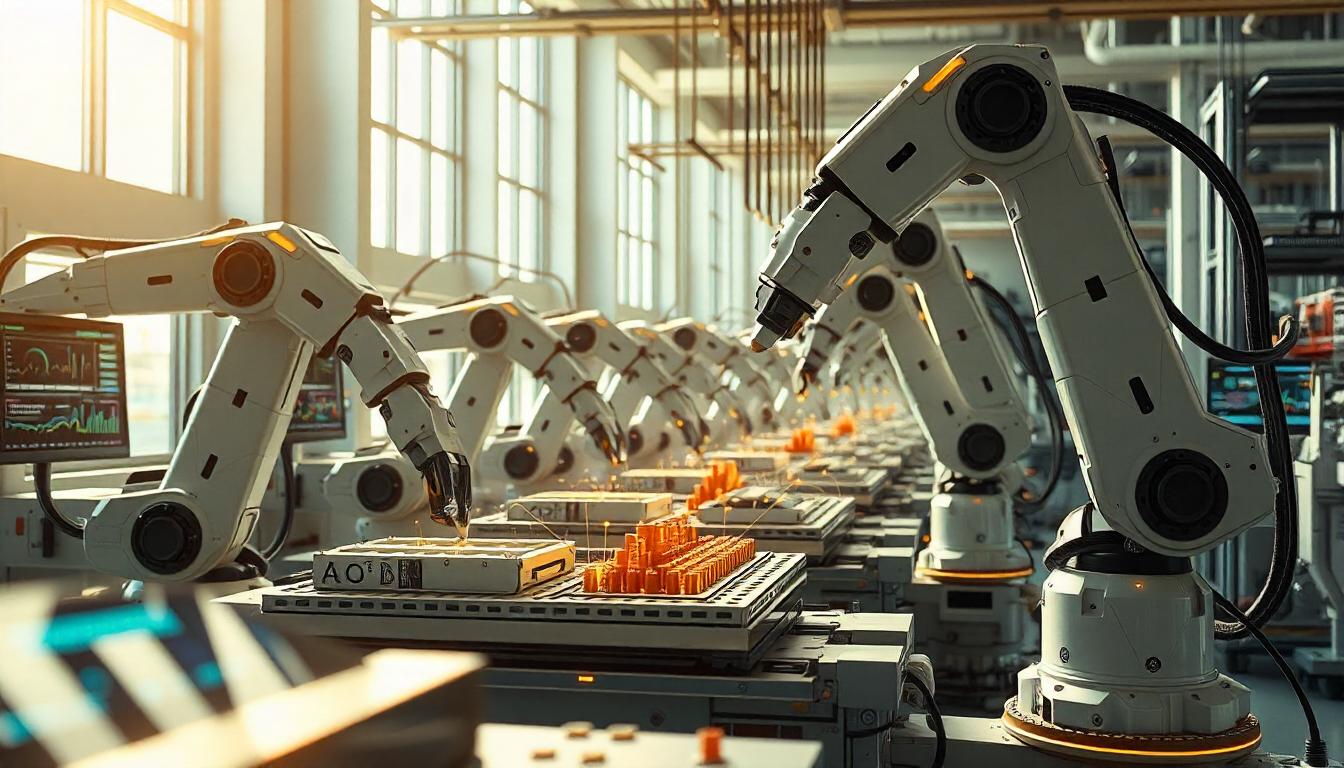
Automation and robotics are at the core of smart manufacturing, enabling machines to perform repetitive tasks with speed and precision. However, many of these systems require real-time communication and coordination to function effectively, especially in large-scale industrial settings.
2. Predictive Maintenance and Reduced Downtime
One of the biggest challenges in manufacturing is equipment downtime, which can lead to significant production losses. With 5G-enabled IoT sensors and real-time analytics, manufacturers can monitor the health and performance of machinery continuously. These sensors collect data on factors such as temperature, vibration, and pressure, and this data is analyzed in real time using AI algorithms.
3. Real-Time Data and Analytics
Smart manufacturing relies on the ability to collect and analyze large amounts of data in real-time. From monitoring machine performance to tracking production workflows, having access to up-to-date information is critical for making informed decisions.
4. Improved Supply Chain Visibility
The supply chain is a critical component of manufacturing, and disruptions can have a ripple effect on production. With 5G-enabled IoT devices, manufacturers can achieve end-to-end visibility across the supply chain, from raw material suppliers to distributors.
5. Augmented Reality (AR) and Remote Support
Augmented Reality (AR) is another key technology that benefits from the speed and low latency of 5G. AR can be used in manufacturing to provide workers with real-time visual instructions, troubleshooting guides, and remote support from experts.
6. Flexible and Customized Production
With 5G-enabled smart manufacturing, factories are becoming more flexible and capable of producing customized products at scale. Traditionally, manufacturing lines were designed for mass production, which made it difficult and costly to produce customized goods.
Benefits of 5G in Smart Manufacturing
The adoption of 5G in smart manufacturing brings numerous benefits, including:
- Increased Efficiency: With real-time data, predictive maintenance, and automation, manufacturers can optimize processes, reduce waste, and improve resource utilization.
- Reduced Costs: By minimizing downtime, optimizing energy usage, and automating labor-intensive tasks, 5G-enabled smart manufacturing helps reduce operational costs.
- Enhanced Agility: Manufacturers can quickly adapt to changing market demands and customize production lines to meet specific customer needs.
- Improved Safety: 5G enables remote monitoring and control of machines, reducing the need for human intervention in hazardous environments and enhancing worker safety.
- Sustainability: With real-time monitoring and optimization, manufacturers can reduce energy consumption, lower emissions, and minimize waste, contributing to more sustainable production practices.
Challenges of 5G Adoption in Manufacturing
While the potential of 5G in smart manufacturing is vast, there are several challenges that companies must address when implementing this technology:
- Infrastructure Costs: Implementing 5G networks and upgrading existing infrastructure to support smart manufacturing can be expensive.
- Data Security: With the proliferation of IoT devices and the increased connectivity provided by 5G, manufacturers must ensure robust cybersecurity measures are in place to protect sensitive data and prevent cyberattacks.
- Skill Gaps: The transition to smart manufacturing requires new skill sets, particularly in data analysis, AI, and IoT. Manufacturers will need to invest in training and upskilling workers to take full advantage of 5G-enabled technologies.
The Future of 5G and Smart Manufacturing
The future of manufacturing is undoubtedly tied to the continued development and adoption of 5G. As 5G networks become more widespread and accessible, more manufacturers will be able to embrace smart technologies and drive digital transformation in their operations.
Conclusion
The combination of 5G and smart manufacturing is transforming the industrial landscape, offering manufacturers new opportunities to optimize operations, reduce costs, and increase productivity. By providing ultra-fast connectivity, low latency, and massive device support, 5G is powering the rise of smart factories, enabling real-time decision-making, predictive maintenance, and automated production.
As industries continue to adopt 5G, the benefits of smart manufacturing will become even more pronounced, driving innovation and competitiveness in the global market. However, to fully realize the potential of 5G, manufacturers must overcome challenges related to infrastructure, security, and workforce development. In the end, those that successfully integrate 5G into their operations will be well-positioned to lead in the era of Industry 4.0.

