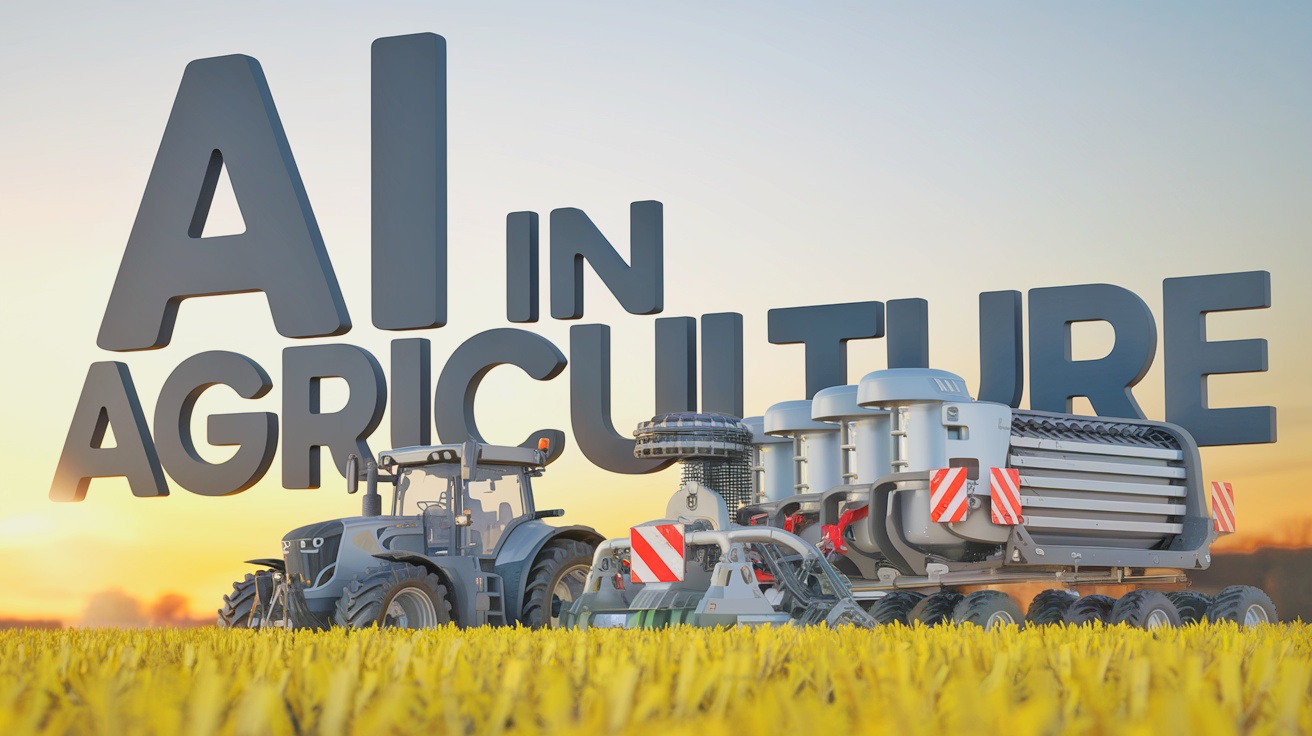
AI in Agriculture: How Machine Learning is Transforming Farming
AI in Agriculture: How Machine Learning is Transforming Farming
Artificial Intelligence (AI) and machine learning are reshaping industries worldwide, and agriculture is no exception. Traditionally reliant on manual labor and conventional farming methods, agriculture is now undergoing a technological revolution, with AI-driven solutions leading the charge. From optimizing crop yields to enhancing resource management, AI is unlocking new possibilities that are transforming farming into a more efficient, productive, and sustainable industry.
This article explores how machine learning and AI are transforming agriculture, the key applications of these technologies, and the benefits and challenges they bring to modern farming.
1. The Role of AI in Agriculture
AI in agriculture focuses on applying advanced algorithms, predictive analytics, and robotics to solve complex challenges. Machine learning, a subset of AI, enables systems to learn from data, identify patterns, and make decisions without being explicitly programmed. This capability is essential in agriculture, where vast amounts of data on crops, weather, soil, and livestock are generated and need to be analyzed to make informed decisions.
Data-Driven Agriculture
Agriculture is increasingly becoming a data-driven industry. AI and machine learning allow farmers to process and analyze large datasets collected from sensors, drones, and satellites to gain actionable insights. These insights help farmers make better decisions about when to plant, how to irrigate, where to apply pesticides, and how to optimize crop yields. By integrating AI into farming, agriculture becomes more precise and resource-efficient, leading to greater productivity with fewer inputs.
Automation and Smart Farming
AI is also driving automation in agriculture, often referred to as “smart farming.” With the help of autonomous machines, drones, and robots, farming tasks such as planting, harvesting, and crop monitoring can be carried out with minimal human intervention. AI-powered systems can automate repetitive tasks, allowing farmers to focus on more strategic decisions and improving overall farm management.
2. Key Applications of AI and Machine Learning in Agriculture
AI and machine learning are being applied across various areas of agriculture, revolutionizing how farmers grow crops, raise livestock, and manage their land. Below are some of the most impactful applications.
Precision Agriculture
Precision agriculture is one of the most significant AI-driven innovations in modern farming. It involves using data and technology to optimize farming practices at a micro-level, allowing farmers to manage fields down to individual plants rather than treating entire fields uniformly.
AI-driven precision agriculture systems can:
- Analyze soil conditions to determine optimal planting schedules.
- Monitor crop health in real-time using satellite imagery and drone data.
- Adjust irrigation and fertilization practices to match the specific needs of plants in different areas of the field.
For example, machine learning algorithms can analyze data from soil sensors to determine when crops need water, ensuring that irrigation systems deliver water only when necessary, reducing waste and improving efficiency. By tailoring inputs to the precise needs of the crop, farmers can improve yields, reduce input costs, and minimize the environmental impact of farming.
Crop Monitoring and Disease Detection
AI-powered drones and satellite imagery are increasingly being used to monitor crops and detect signs of stress or disease. Machine learning algorithms can process vast amounts of visual data to identify early indicators of pest infestations, nutrient deficiencies, or fungal infections, enabling farmers to take corrective action before the damage becomes extensive.
For instance, image recognition models trained on thousands of plant images can differentiate between healthy and unhealthy crops. AI systems can then alert farmers to potential issues, allowing for timely interventions. This early detection not only saves crops but also reduces the need for excessive pesticide use, promoting more sustainable farming practices.
Yield Prediction and Optimization
Predicting crop yields accurately is crucial for farmers, agribusinesses, and policymakers alike. AI models can analyze a wide range of variables—such as historical crop performance, weather patterns, soil conditions, and satellite data—to predict future yields. These predictions help farmers make informed decisions about resource allocation, crop rotation, and market timing.
Machine learning algorithms can continuously learn from new data, improving their accuracy over time. By predicting yields with greater precision, farmers can optimize their operations, minimize risks, and increase profitability.
Livestock Management
AI is also making waves in the livestock industry. Machine learning algorithms can be used to monitor the health and well-being of livestock, predict diseases, and optimize feeding schedules. Wearable sensors attached to livestock collect real-time data on their behavior, movement, and health. AI systems analyze this data to detect signs of illness, stress, or abnormal behavior, allowing for early intervention.
In dairy farming, for example, AI-powered systems can monitor the health of cows, track their milk production, and detect signs of illness or injury. This data-driven approach helps farmers optimize milk yields while ensuring the well-being of their herds.
Autonomous Machinery and Robotics
Autonomous tractors, drones, and robots are becoming increasingly common in modern farming, reducing the need for manual labor and increasing efficiency. AI-driven machines can perform a wide range of tasks, from planting and weeding to harvesting and spraying crops.
- Autonomous Tractors: AI-powered tractors can navigate fields autonomously, planting seeds with precision and avoiding obstacles. These tractors can operate around the clock, increasing productivity and reducing labor costs.
- Harvesting Robots: AI-enabled robots are capable of harvesting crops with greater speed and accuracy than human labor. These robots can differentiate between ripe and unripe produce, picking only the crops ready for harvest. This technology is particularly useful in labor-intensive crops like fruits and vegetables.
- Drones: AI-powered drones equipped with cameras and sensors can survey large agricultural fields, monitor crop health, and identify areas that need attention. They can also be used to spray crops with pesticides or fertilizers, targeting only the areas that require treatment.
Weather Forecasting and Climate Adaptation
Weather plays a critical role in agriculture, and accurate weather forecasting can significantly impact farming decisions. Machine learning models can analyze historical weather data, satellite images, and atmospheric patterns to predict future weather conditions more accurately than traditional methods.
AI can also help farmers adapt to changing climate conditions. By analyzing long-term climate data, AI models can identify trends in temperature, rainfall, and other factors that influence crop growth. Farmers can use this information to adjust planting schedules, select climate-resistant crop varieties, and implement water-saving techniques, helping them mitigate the impact of climate change on their operations.

3. Benefits of AI in Agriculture
The integration of AI into agriculture offers numerous benefits, transforming farming into a more efficient, sustainable, and profitable industry.
Increased Efficiency and Productivity
AI technologies help automate labor-intensive tasks, reducing the time and effort required to manage large farms. Precision agriculture tools optimize the use of resources like water, fertilizers, and pesticides, leading to higher yields with fewer inputs. Farmers can also make better-informed decisions, thanks to AI-powered predictive analytics.
Improved Sustainability
AI helps farmers adopt more sustainable practices by minimizing waste, reducing the use of chemicals, and improving resource efficiency. For example, AI-driven irrigation systems ensure that crops receive the right amount of water, preventing over-irrigation and reducing water waste. AI’s ability to detect pests and diseases early also reduces the need for broad-spectrum pesticide applications, minimizing the environmental impact of farming.
Cost Reduction
AI-driven automation reduces labor costs by performing tasks such as planting, weeding, and harvesting more efficiently than manual labor. Precision agriculture systems ensure that resources like seeds, water, and fertilizer are used only where needed, lowering input costs and maximizing profitability.
Enhanced Decision-Making
AI provides farmers with actionable insights based on data analysis, helping them make more informed decisions about crop management, resource allocation, and risk mitigation. By predicting yields, weather patterns, and potential disease outbreaks, AI helps farmers optimize their operations and minimize losses.
4. Challenges of AI in Agriculture
While AI holds immense potential for agriculture, there are also challenges that need to be addressed for widespread adoption.
High Costs and Accessibility
Implementing AI technologies often requires significant upfront investment in hardware, software, and infrastructure. Small-scale farmers, particularly in developing countries, may not have the financial resources to adopt these technologies. Ensuring that AI tools are accessible and affordable for farmers of all sizes is crucial for the widespread adoption of AI in agriculture.
Data Privacy and Security
The use of AI in agriculture relies on the collection and analysis of vast amounts of data, including sensitive information about crops, soil conditions, and farm operations. Ensuring that this data is securely stored and protected from cyber threats is essential. Data privacy concerns must also be addressed, particularly in cases where third-party providers manage farming data.
Skill Gaps and Training
AI technologies require a certain level of technical expertise to implement and manage. Farmers may need to be trained on how to use AI tools effectively. Bridging the skill