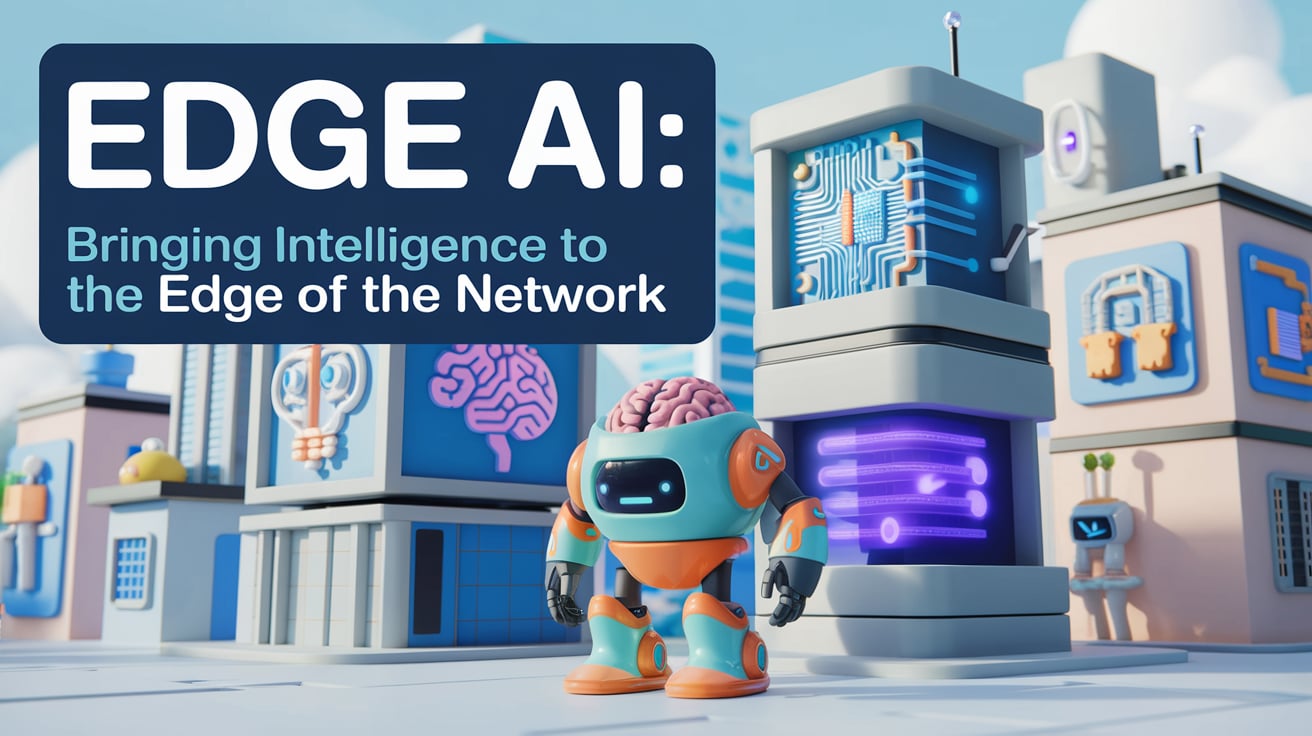
Edge AI: Bringing Intelligence to the Edge of the Network
Introduction
In recent years, the explosion of data generated by Internet of Things (IoT) devices, coupled with the growing demand for real-time analytics, has prompted a significant shift in the way artificial intelligence (AI) is deployed and utilized. Enter Edge AI—a transformative paradigm that brings computational intelligence closer to the data source, minimizing latency and enhancing efficiency. As businesses and organizations increasingly recognize the advantages of processing data at the edge of the network, understanding the fundamentals, benefits, challenges, and future trends of Edge AI becomes essential. This article explores the intricacies of Edge AI and its role in revolutionizing industries across the globe.
What is Edge AI?
Definition
Edge AI refers to the integration of AI algorithms and models at the edge of the network, where data is generated, rather than relying on centralized cloud computing resources. By processing data locally, Edge AI enables real-time analytics and decision-making, significantly reducing latency and bandwidth requirements.
Key Components of Edge AI
- Edge Devices: These are the hardware components (such as sensors, cameras, and IoT devices) located near the data source. They collect, process, and transmit data.
- AI Algorithms: These are the models and algorithms that enable machines to learn from data and make predictions or decisions. In Edge AI, these algorithms are often lightweight to optimize performance on edge devices.
- Connectivity: Edge AI systems require reliable connectivity to communicate with cloud services for updates, additional processing, and data storage when needed.
Benefits of Edge AI
- Reduced Latency: One of the most significant advantages of Edge AI is its ability to minimize latency. By processing data locally, edge devices can deliver insights and responses in real time, which is critical for applications like autonomous vehicles, industrial automation, and smart healthcare.
- Bandwidth Optimization: Transmitting large volumes of data to centralized cloud servers can strain network bandwidth. Edge AI reduces this demand by processing data at the source and sending only relevant information to the cloud. This optimization is particularly beneficial in environments with limited connectivity.
- Enhanced Privacy and Security: Processing sensitive data locally can improve security and privacy. By minimizing the amount of data sent to the cloud, organizations can better protect user information and comply with data protection regulations.
- Improved Reliability: Edge AI systems can operate independently of cloud connectivity, making them more resilient to network outages. This independence is crucial in critical applications where continuous operation is required, such as healthcare monitoring and industrial automation.
- Real-Time Decision-Making: By enabling real-time analytics, Edge AI empowers organizations to make timely decisions based on the latest data. This capability is essential in industries such as manufacturing, where quick responses can prevent costly downtime.

Use Cases of Edge AI
- Smart Cities: Edge AI plays a vital role in the development of smart cities, where connected devices work together to optimize urban living. Applications include:
- Traffic Management: Edge AI can analyze real-time traffic data from cameras and sensors to optimize traffic flow, reduce congestion, and improve public safety.
- Public Safety: Surveillance systems equipped with Edge AI can identify potential threats or emergencies and alert authorities instantaneously.
- Healthcare: In healthcare, Edge AI is transforming patient monitoring and diagnostics:
- Remote Patient Monitoring: Wearable devices can analyze patient data locally, providing healthcare professionals with real-time insights into patient conditions without delay.
- Medical Imaging: Edge AI can assist radiologists by analyzing medical images on-site, reducing the time required for diagnosis and enabling faster treatment decisions.
- Industrial Automation: In manufacturing and industrial settings, Edge AI enhances efficiency and productivity:
- Predictive Maintenance: Edge devices can monitor equipment health and performance, predicting failures before they occur and minimizing downtime.
- Quality Control: AI algorithms can analyze production lines in real time to identify defects and ensure product quality.
- Retail: Edge AI is being utilized in retail to enhance customer experiences:
- Personalized Marketing: Retailers can analyze customer behavior at the edge to deliver personalized promotions and recommendations based on real-time data.
- Inventory Management: Edge AI can track inventory levels and sales trends in real time, optimizing stock management and reducing waste.
- Autonomous Vehicles: Edge AI is a critical component of autonomous driving technology:
- Real-Time Data Processing: Autonomous vehicles use Edge AI to process data from sensors and cameras, enabling quick decisions about navigation, obstacle detection, and safety.
- Vehicle-to-Everything (V2X) Communication: Edge AI enables vehicles to communicate with other vehicles and infrastructure, improving overall traffic safety and efficiency.
Challenges of Edge AI
- Resource Constraints: Edge devices often have limited computational power and memory compared to cloud servers. Developing lightweight AI models that can operate efficiently on these devices is a significant challenge.
- Data Management: With Edge AI, organizations must develop strategies for managing data effectively. This includes ensuring data quality, determining what data to process locally versus in the cloud, and implementing data governance practices.
- Security Risks: While Edge AI can enhance security by processing data locally, it also introduces new vulnerabilities. Edge devices can be targets for cyberattacks, necessitating robust security measures to protect data and systems.
- Interoperability: As organizations adopt diverse edge devices and AI solutions, ensuring interoperability among various systems becomes crucial. Standardization and integration are essential for maximizing the benefits of Edge AI.
- Skills Gap: Implementing Edge AI requires expertise in both AI and edge computing. Organizations may face challenges in finding and retaining talent with the necessary skills to develop and maintain Edge AI solutions.
Trends Shaping Edge AI in 2024
- Integration with 5G Technology: The rollout of 5G networks will significantly enhance the capabilities of Edge AI. With its high-speed connectivity and low latency, 5G will enable more sophisticated applications, such as real-time video analytics and augmented reality, at the edge.
- AI Democratization: The growing availability of AI tools and platforms is making it easier for businesses to adopt Edge AI. Low-code and no-code solutions will enable organizations with limited technical expertise to implement AI-driven edge applications, democratizing access to this transformative technology.
- Edge AI for Sustainability: As sustainability becomes a priority for organizations, Edge AI will play a key role in optimizing resource usage and reducing energy consumption. Smart grids, efficient waste management systems, and energy monitoring solutions will leverage Edge AI to promote sustainability.
- Enhanced Collaboration Between Cloud and Edge: While Edge AI focuses on local processing, the collaboration between edge and cloud environments will become increasingly important. Hybrid models that leverage both cloud and edge computing will enable organizations to optimize their workflows and data processing capabilities.
- Focus on Privacy-Enhancing Technologies: As data privacy regulations become more stringent, organizations will seek Edge AI solutions that prioritize data privacy. Techniques such as federated learning and differential privacy will enable organizations to develop AI models without compromising sensitive information.
- Advances in AI Hardware: The development of specialized hardware for AI processing at the edge will continue to advance. Innovations such as edge AI chips and neuromorphic computing will enhance the performance and efficiency of edge devices.
Conclusion
Edge AI represents a paradigm shift in the way organizations process and analyze data. By bringing intelligence closer to the data source, Edge AI minimizes latency, enhances efficiency, and enables real-time decision-making across a multitude of applications. From smart cities and healthcare to industrial automation and autonomous vehicles, the impact of Edge AI is profound and far-reaching.
While challenges such as resource constraints, data management, and security remain, the ongoing advancements in technology and increasing adoption of Edge AI solutions will drive the transformation of industries. As we move into 2024 and beyond, organizations that embrace Edge AI will be better positioned to leverage data-driven insights, enhance operational efficiency, and deliver exceptional customer experiences.
In this rapidly evolving landscape, understanding and adopting Edge AI is not just an option; it is a necessity for organizations aiming to stay competitive in the digital age. By bridging the gap between the physical and digital worlds, Edge AI will undoubtedly shape the future of technology and redefine the possibilities for businesses across the globe.