Extended Reality (XR): Merging the Physical and Digital Worlds
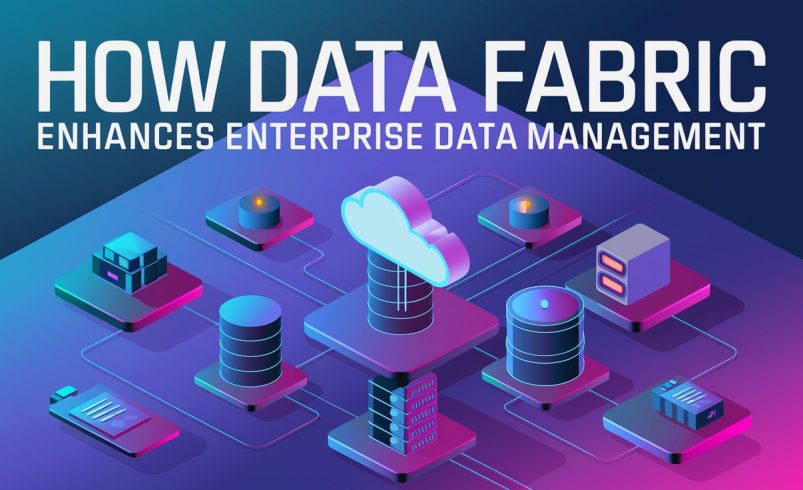
How Data Fabric Enhances Enterprise Data Management
In today’s digital age, businesses are generating and handling vast amounts of data from multiple sources. Managing this data efficiently and ensuring its accessibility, security, and usability across the enterprise has become a critical challenge. This is where the concept of Data Fabric comes into play, offering a comprehensive solution for modern enterprises seeking to streamline their data management processes and maximize the value of their data assets.
Data fabric is an emerging architecture that simplifies data management by creating a unified framework that connects and integrates data across various environments—on-premises, cloud, and edge. This technology enhances enterprise data management by providing a holistic and intelligent approach to accessing, processing, and utilizing data, irrespective of where it resides.
In this article, we will explore the key aspects of data fabric, how it works, and the ways in which it enhances enterprise data management, driving improved decision-making, innovation, and business outcomes.
Understanding Data Fabric
Data fabric is a data architecture that integrates and connects different data sources, formats, and environments in a cohesive framework. It provides a unified view of data across an organization, regardless of where the data is stored or how it is formatted. By breaking down data silos, data fabric enables seamless access to data across different systems, allowing organizations to use their data more effectively and efficiently.
The key principle behind data fabric is to treat data as a continuous and connected resource, available to users whenever and wherever they need it. It leverages advanced technologies such as AI, machine learning (ML), metadata management, and data integration tools to ensure that data is always available, consistent, and up-to-date across the entire organization.
Data fabric aims to address several core data management challenges that enterprises face, including data silos, inconsistent data formats, and the growing complexity of managing data across multiple environments.
Key Features of Data Fabric
To understand how data fabric enhances enterprise data management, it is essential to examine some of its core features and capabilities:
- Unified Data Access
One of the most significant advantages of data fabric is its ability to provide unified data access. In traditional data environments, data often resides in isolated silos—stored in different databases, applications, or cloud platforms. This fragmentation makes it challenging for organizations to obtain a complete view of their data and derive meaningful insights.
Data fabric overcomes this challenge by creating a seamless layer of access across all data sources. Whether the data is stored on-premises, in the cloud, or at the edge, data fabric enables users to access and analyze it without having to move or duplicate the data. This unified access enhances data availability, enabling faster decision-making and improving collaboration across teams. - Data Integration and Connectivity
Data fabric facilitates the integration of data from diverse sources, whether structured, semi-structured, or unstructured. Through its advanced data integration capabilities, it can connect data from multiple platforms, applications, and storage systems, bringing them together into a single, connected environment.
Data fabric uses APIs, connectors, and other integration tools to ensure that data flows seamlessly between systems, enabling businesses to create more robust data pipelines. This allows organizations to integrate real-time data from various sources, ensuring that decision-makers have access to the most up-to-date information. - Automation and Intelligence
Data fabric leverages AI and machine learning to automate various data management tasks, such as data discovery, classification, and quality assurance. By using AI-driven automation, data fabric can analyze metadata, identify relationships between data elements, and recommend ways to optimize data usage.
This intelligence layer also enables predictive analytics and advanced data processing, helping organizations identify patterns and trends that can drive business value. By automating repetitive data management tasks, data fabric reduces the manual effort required to maintain and optimize data environments, freeing up time for more strategic activities. - Metadata Management and Governance
Metadata—the data about data—is a critical component of data management. Data fabric incorporates metadata management capabilities to ensure that data is well-organized, traceable, and properly governed. It maintains a consistent set of metadata across all data sources, making it easier for organizations to catalog, search, and retrieve data when needed.
In addition to metadata management, data fabric also supports data governance by enforcing data security policies, compliance regulations, and access controls. This ensures that sensitive data is protected, and only authorized users have access to it, reducing the risk of data breaches or misuse. - Data Virtualization
Data virtualization is another key feature of data fabric. It allows users to access and query data from multiple sources without physically moving or copying the data. This virtual access not only reduces the need for complex data migrations but also ensures that data remains consistent across different environments.
With data virtualization, businesses can create a single view of their data, enabling real-time analytics and faster decision-making. This is particularly valuable for organizations dealing with large volumes of data spread across different locations, as it simplifies the process of accessing and analyzing that data.

How Data Fabric Enhances Enterprise Data Management
With its advanced capabilities, data fabric significantly enhances enterprise data management in several key areas. Here’s how:
- Breaking Down Data Silos
One of the biggest challenges for large enterprises is managing data silos, where data is isolated in different departments, applications, or systems. These silos make it difficult to get a comprehensive view of the business and hinder collaboration between teams. Data fabric breaks down these silos by creating a unified, connected data environment where data from different sources can be accessed and integrated easily.
By eliminating data silos, organizations can enable better cross-departmental collaboration, improve decision-making, and streamline operations. It ensures that every team has access to the same data, fostering a more data-driven culture across the organization. - Improving Data Quality and Consistency
Inconsistent or poor-quality data can lead to inaccurate analysis and misguided business decisions. Data fabric enhances data quality by applying consistent data governance and validation rules across all data sources. It ensures that data is cleansed, validated, and standardized before being used in analysis or reporting.
Additionally, data fabric provides a single source of truth for the organization, ensuring that data remains consistent regardless of where it resides. This unified view of data reduces the risk of errors and discrepancies, leading to more accurate insights and better business outcomes. - Enhancing Scalability and Flexibility
As businesses grow, so do their data needs. Managing increasing volumes of data can become complex, particularly when it spans across multiple environments (on-premises, cloud, and edge). Data fabric enhances scalability by providing a flexible architecture that can easily accommodate growing data volumes and new data sources.
The ability to scale data infrastructure without disrupting existing operations is a major advantage for enterprises looking to expand their data capabilities. Data fabric’s architecture is also highly adaptable, allowing organizations to integrate new data types, applications, and platforms as their needs evolve. - Accelerating Data-Driven Innovation
Data fabric enables organizations to tap into the full potential of their data, driving innovation and new business opportunities. By providing real-time access to high-quality data, businesses can accelerate their analytics and AI initiatives, uncover new insights, and develop innovative solutions to complex challenges.
With the intelligence and automation capabilities built into data fabric, organizations can also experiment with advanced analytics techniques such as predictive analytics, machine learning, and artificial intelligence. This can lead to new product development, improved customer experiences, and more efficient operations. - Enhancing Data Security and Compliance
Data security and regulatory compliance are critical concerns for enterprises, particularly those that deal with sensitive customer or financial data. Data fabric enhances data security by integrating robust governance policies, encryption, and access control mechanisms across all data environments. This ensures that data is secure no matter where it is stored or processed.
Moreover, data fabric simplifies compliance with industry regulations such as GDPR, HIPAA, and CCPA by automating data auditing and reporting processes. Organizations can ensure that their data management practices are aligned with legal requirements, reducing the risk of costly fines or reputational damage.
Challenges and Considerations
While data fabric offers significant benefits for enterprise data management, it is not without its challenges. Implementing a data fabric architecture requires careful planning, particularly around data integration, governance, and technology selection. Organizations must also consider the following:
- Complexity of Implementation: Setting up a data fabric architecture can be complex, especially for large enterprises with legacy systems. Integration between diverse data sources and systems may require significant effort and expertise.
- Cost Considerations: While data fabric can offer long-term cost savings by improving efficiency, the initial implementation and ongoing management of the architecture can be costly. Organizations need to weigh these costs against the benefits of improved data management.
- Technology Ecosystem: Choosing the right tools and platforms to build a data fabric is crucial. Enterprises need to ensure that their technology stack supports interoperability, scalability, and flexibility to accommodate future growth.
Conclusion
Data fabric represents a revolutionary approach to enterprise data management, offering a seamless and unified way to manage, access, and analyze data across multiple environments. By breaking down data silos, improving data quality, and enabling real-time analytics, data fabric enhances the ability of businesses to make data-driven decisions, drive innovation, and achieve better business outcomes.
As organizations continue to embrace digital transformation, the adoption of data fabric will become increasingly important for managing the complexity of modern data environments. By investing in data fabric, businesses can streamline their data management processes, improve operational efficiency, and unlock new opportunities for growth in the data-driven era.