How to Build a Website That Converts (Not Just Looks Good)
How to Build a Website That Converts (Not Just Looks Good)
In today’s digital-first world, your website is often the first impression people get of your business. Naturally, you want it to look great. But here’s the truth most businesses miss: a beautiful website that doesn’t convert is just digital decoration.
Good design gets attention. Great design drives action.
So how do you build a website that doesn’t just sit pretty—but actually helps grow your business? Whether your goal is to generate leads, sell products, book calls, or build an email list, this blog breaks down the essential steps to building a conversion-focused website.
Let’s dive in.
What Is a “Website That Converts”?
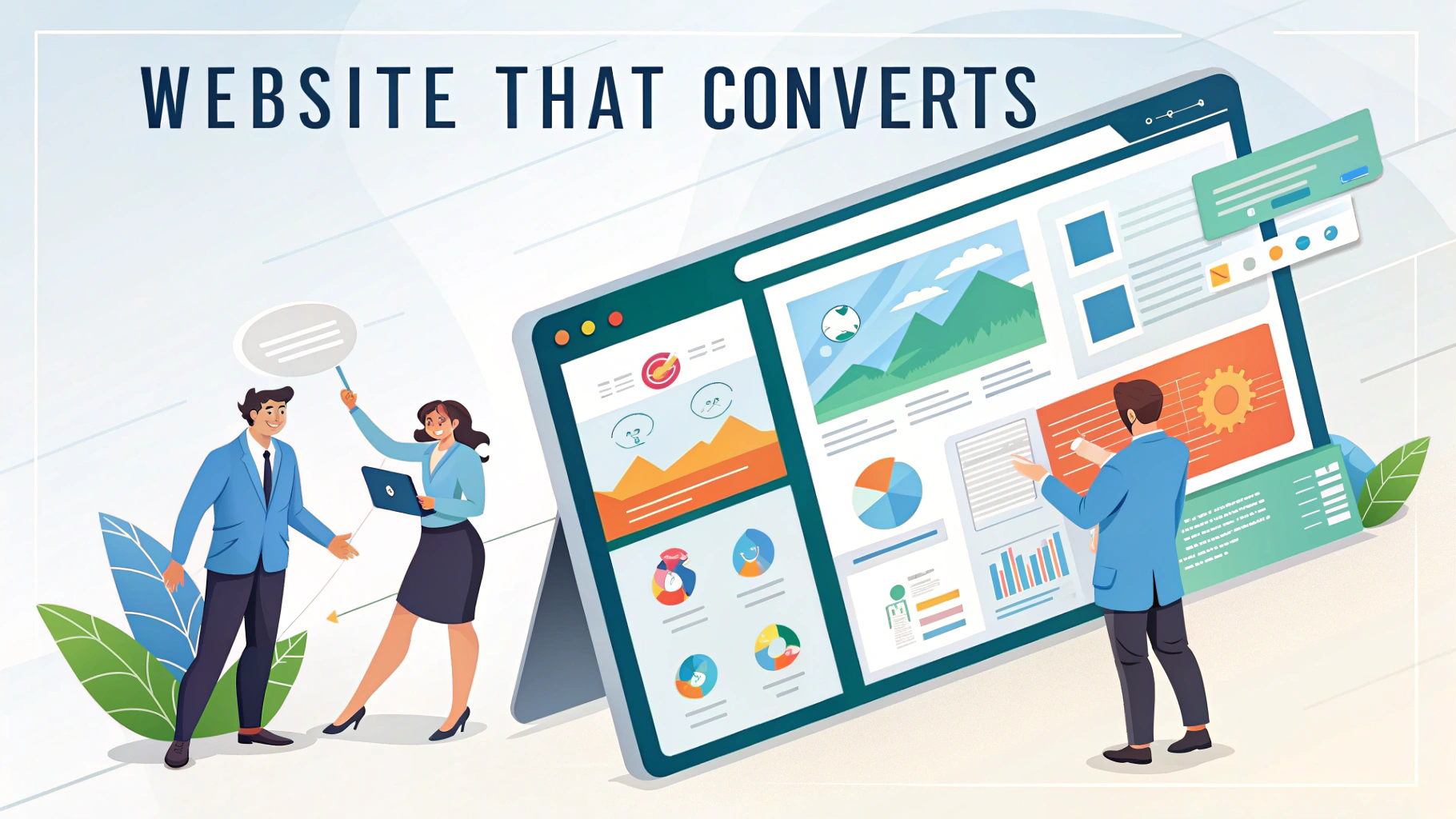
A website that converts is one that guides visitors toward taking a specific action—filling out a form, making a purchase, scheduling a consultation, signing up for a newsletter, or whatever your goal may be.
Conversion = Action Taken ÷ Total Visitors
So if 1,000 people visit your site and 30 take action, your conversion rate is 3%.
Your website isn’t just a digital brochure. It’s your 24/7 salesperson, and it should be optimized to drive results, not just admiration.
1. Start with Strategy, Not Design
Before picking colors or layouts, ask the most important question:
What do you want your website to do?
Common goals include:
- Generating leads
- Selling products or services
- Booking appointments or demos
- Growing an email list
- Educating or nurturing prospects
Once you define your primary goal, every design and content decision should support it. This clarity will also help you prioritize which pages to build, what to include above the fold, and how to structure your calls-to-action (CTAs).
🎯 Pro Tip: Don’t try to make your site do everything. Focus on one or two core actions per page.
2. Know Your Audience Inside and Out
You can’t convert visitors if you don’t understand them.
- Who are they?
- What problems do they have?
- What are they looking for when they land on your site?
- What objections or hesitations might they have?
Build your website around your ideal customer’s journey. Speak to their pain points, offer clear solutions, and guide them to the next step.
Tools to help:
- Customer interviews
- Surveys
- Google Analytics
- Heatmaps (like Hotjar or Crazy Egg)
- User testing
3. Craft a Clear and Compelling Value Proposition
Within 3–5 seconds of landing on your homepage, visitors should know:
- What you do
- Who it’s for
- Why they should care
This is your value proposition, and it should live right at the top of your homepage.
❌ Avoid vague copy like: “We help businesses grow.”
✅ Try something clearer: “We build SEO-optimized websites that turn visitors into leads—for small businesses that want to grow faster.”
Clarity beats cleverness every time.
4. Design for User Experience (UX)
A website that converts must be easy to use. If visitors get lost, confused, or frustrated—they’re gone.
Key UX principles:
- Simple, intuitive navigation
- Logical page structure using visual hierarchy
- Mobile-first design
- Fast loading times (under 3 seconds)
📱 Test your site across multiple devices and browsers before launch.
5. Make Calls-to-Action Unmissable
Your call-to-action (CTA) is where conversion happens—don’t bury it.
Effective CTAs are:
- Visually prominent
- Easy to understand
- Repeated multiple times on the page
🎯 Pro Tip: Use action-oriented, benefit-driven language like “Get My Free Quote” or “Start My Trial.”
6. Use Conversion-Focused Copywriting
Design pulls people in. Copy keeps them there.
Tips:
- Use customer-centric language
- Keep paragraphs short and scannable
- Use bullet points and subheadings
- Incorporate testimonials, stats, case studies
- Preempt objections
And always write like a real human.

7. Build Trust with Social Proof
No one wants to be the guinea pig. Show that others love your offer.
Types of social proof:
- ⭐⭐⭐⭐⭐ Customer testimonials
- Video reviews
- Client or partner logos
- Case studies
- User stats (e.g., “Over 10,000 happy users”)
- Trust badges
Place these near your CTAs for maximum impact.
8. Optimize for SEO (So People Can Find You)
Even the best website needs visibility. SEO gets you there.
SEO essentials:
- Keyword-rich titles & meta descriptions
- Descriptive headings
- Alt text on images
- Internal linking
- Clean, short URLs
- Fast and mobile-friendly site
9. Capture Leads (Even If They’re Not Ready Yet)
Most visitors won’t buy right away—so capture their info and nurture them.
Lead magnets:
- Free guides or checklists
- Webinars or video trainings
- Discounts or free trials
- Email newsletters
10. Use Analytics to Improve Constantly
Your site should evolve. Use data to refine it.
Tools:
- Google Analytics
- Hotjar / Crazy Egg
- A/B testing software
Track:
- High vs. low converting pages
- Exit pages
- Top-converting traffic sources
Then tweak, test, and repeat.
Bonus Tips for Higher Conversions
- Live chat or chatbots
- Clear contact information
- Exit-intent popups
- Retargeting ads
- Accessibility for all users
Real-World Example: Conversion vs. Pretty Design
Website A:
- Stunning video background
- Elegant fonts
- Minimalist copy
- But unclear CTA, slow load, and poor usability
Website B:
- Simple design
- Strong headline: “Get Unstuck. Start Living With Clarity.”
- Bold CTA: “Book Your Free Discovery Call”
- Testimonials and FAQs included
Result: Website B converts better because it’s user-centric and action-oriented.
Conclusion: Design with Purpose, Not Just Aesthetics
A truly effective website balances form and function. Yes, it should look good—but every element should drive business results.
- Your website isn’t art—it’s a tool.
- Good design shows off. Great design converts.
- Empathy, clarity, and persuasion win over fancy effects.
Whether launching new or redesigning old—focus on helping visitors become customers.