Personal Branding vs Business Branding: Which One Do You Need?
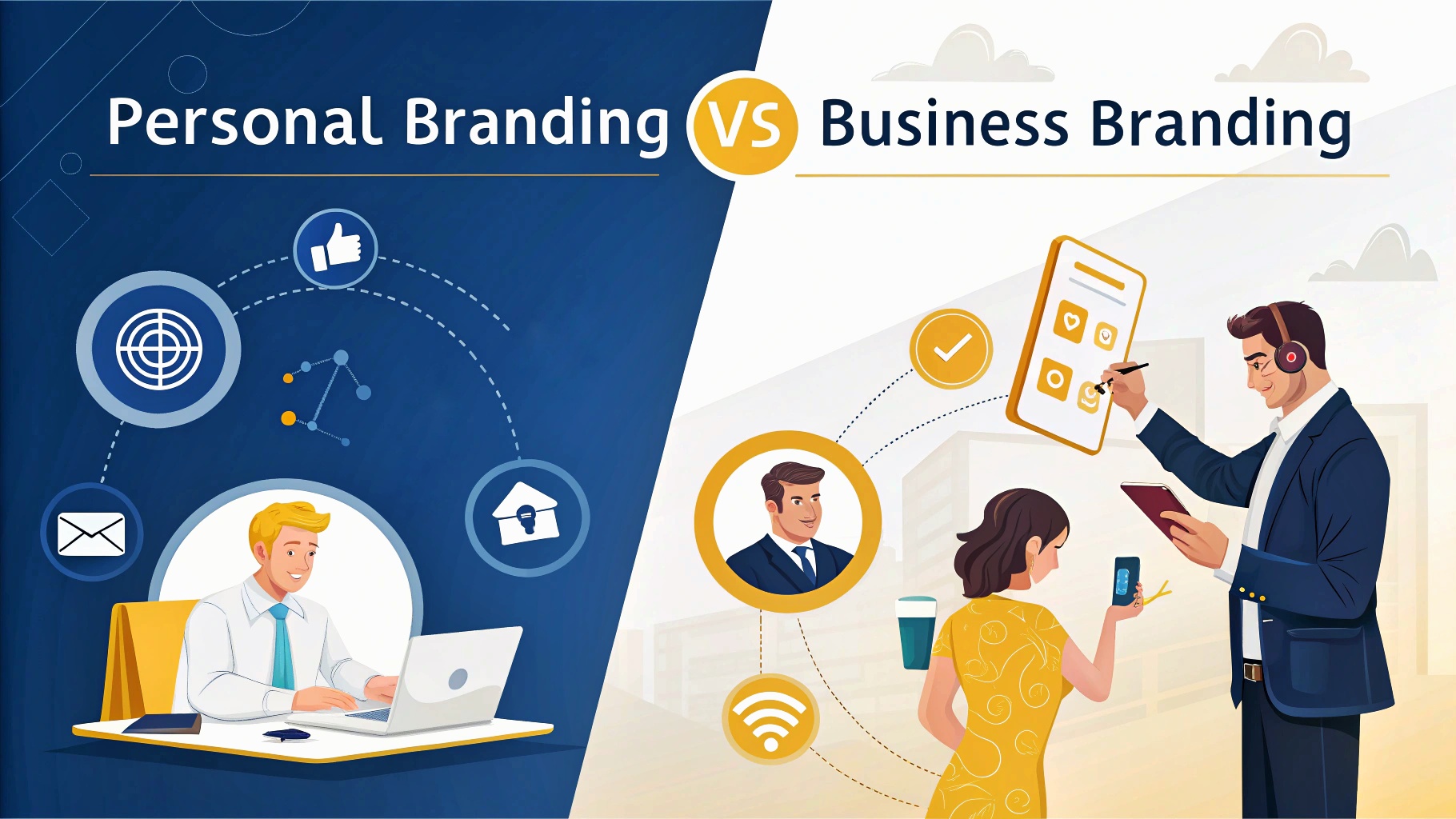
Personal Branding vs Business Branding: Which One Do You Need?
In today’s hyper-connected world, branding isn’t just for companies anymore. Entrepreneurs, freelancers, creators, and even corporate professionals are investing in something once reserved for businesses: personal branding.
So that begs the question—when you’re launching a business, building a product, or growing your influence, should you focus on personal branding or business branding?
The answer isn’t one-size-fits-all. Each type of branding serves a unique purpose, and understanding the differences can help you choose (or combine) the right approach for your goals.
What Is Personal Branding?
Personal branding is how you market yourself. It’s the intentional shaping of your public persona—your values, voice, expertise, story, and visuals—so people can connect with and remember you.
Whether you’re a solopreneur, coach, designer, speaker, or executive, your personal brand reflects your:
- Personality
- Skills and expertise
- Beliefs and worldview
- Visual identity (photos, colors, fonts, etc.)
- Content and thought leadership
- Online presence (social media, website, etc.)
Examples of Strong Personal Brands:
- Oprah Winfrey: Her personal brand revolves around empathy, empowerment, and storytelling.
- Gary Vaynerchuk: Known for hustle, honesty, and digital strategy.
- Marie Forleo: Combines business coaching with creativity, optimism, and personality.
In each case, the person is the brand.
What Is Business Branding?
Business branding is how you shape the identity of a company or organization. It involves defining and expressing the company’s mission, values, visual identity, messaging, and customer experience.
Business branding is more structured, often involving:
- Logo, colors, typography
- Brand voice and messaging
- Taglines and positioning statements
- Brand guidelines and strategy
- Marketing assets and campaigns
- Internal brand culture
Examples of Strong Business Brands:
- Apple: Innovation, simplicity, premium design
- Nike: Empowerment, performance, athletic culture
- Airbnb: Belonging, community, travel experience
Key Differences Between Personal and Business Branding
| Aspect | Personal Branding | Business Branding |
|---|---|---|
| Focus | You (the individual) | The company or organization |
| Voice | Authentic, conversational, human | Strategic, polished, scalable |
| Visuals | Often photo-driven, personal design | Logo-driven, professional design |
| Content | Opinion-based, thought leadership, storytelling | Product-focused, solution-driven, customer-first |
| Scalability | Built around the individual | Designed to grow independently of any person |
| Credibility | Built on personal reputation | Built on company credibility and consistency |
| Exit Strategy | Harder to transfer/sell | Easier to sell or franchise |

The Pros and Cons of Personal Branding
✅ Pros
- Trust and relatability
- Agility
- Lower barrier to entry
- Thought leadership
- Monetization of expertise
❌ Cons
- Scalability limitations
- Time-consuming
- Blurry boundaries
- Vulnerability
The Pros and Cons of Business Branding
✅ Pros
- Scalability
- Structured presence
- Professional appearance
- Team empowerment
- Easier to franchise, license, or exit
❌ Cons
- Takes longer to build trust
- More expensive and complex
- Slower to pivot
- Lacks personality if not done well
When You Should Focus on Personal Branding
A personal brand is the right fit if you are:
- A coach, consultant, or freelancer building a service-based business
- A creator (writer, podcaster, YouTuber, etc.) monetizing your personality and expertise
- An early-stage entrepreneur testing an idea before going all-in on a business brand
- A corporate leader or executive wanting to position yourself as an authority or thought leader
- Someone who wants freedom to pivot and express your evolving interests
When You Should Focus on Business Branding
A business brand makes more sense if you are:
- Building a product-based business (e-commerce, SaaS, physical goods)
- Planning to scale with a team, store locations, or franchises
- Hoping to exit or sell the business in the future
- Offering a service that could be delivered by other team members (e.g., agency, studio, legal firm)
- Targeting corporate clients who expect a more professional and structured brand
Can You Combine Both?
Absolutely. In fact, many successful entrepreneurs use a hybrid branding strategy, where their personal brand supports their business brand.
How It Works:
- Use your personal brand to build trust, share your journey, and attract a loyal audience.
- Use your business brand to offer products/services that can scale beyond you.
Examples:
- Richard Branson (Personal) → Virgin Group (Business)
- Jenna Kutcher (Personal) → Courses, Podcast, and Kutcher Studio (Business)
- Elon Musk (Personal) → Tesla, SpaceX, Neuralink (Business)
Building a Personal Brand? Here’s What to Focus On:
- Clarity of purpose
- Content creation
- Visual consistency
- Authenticity
- Engagement
- Positioning
Building a Business Brand? Here’s What to Focus On:
- Clear mission and values
- Brand voice and tone
- Visual identity
- Website and assets
- Customer experience
- Team alignment
Final Thoughts: Which One Do You Need?
There’s no single right answer—it all depends on your goals, your business model, and your audience.
- If your business is you—start with a personal brand.
- If you want to build a scalable, sellable company—invest in business branding.
- If you want the best of both worlds—build a hybrid strategy that leverages you to grow it.
At the end of the day, the goal of any branding is the same: to create clarity, build trust, and make your business (or you) unforgettable.
So whether you’re branding your name or your company, do it with intention. Because when your brand aligns with your purpose, everything else falls into place.