Understanding the Impact of Mixed Reality on Education in 2025
Understanding the Impact of Mixed Reality on Education in 2025
The rapid evolution of technology continues to revolutionize various industries, and education is no exception. In 2025, mixed reality (MR) – a blend of virtual reality (VR) and augmented reality (AR) – has significantly reshaped the educational landscape, providing unprecedented opportunities for immersive learning, skill-building, and personalized education. This transformation of learning environments is both profound and multifaceted, impacting students, educators, institutions, and ultimately, society at large. This blog will delve into how mixed reality is redefining education, the benefits it brings, the challenges it faces, and the long-term implications for the future of learning.
1. What is Mixed Reality?
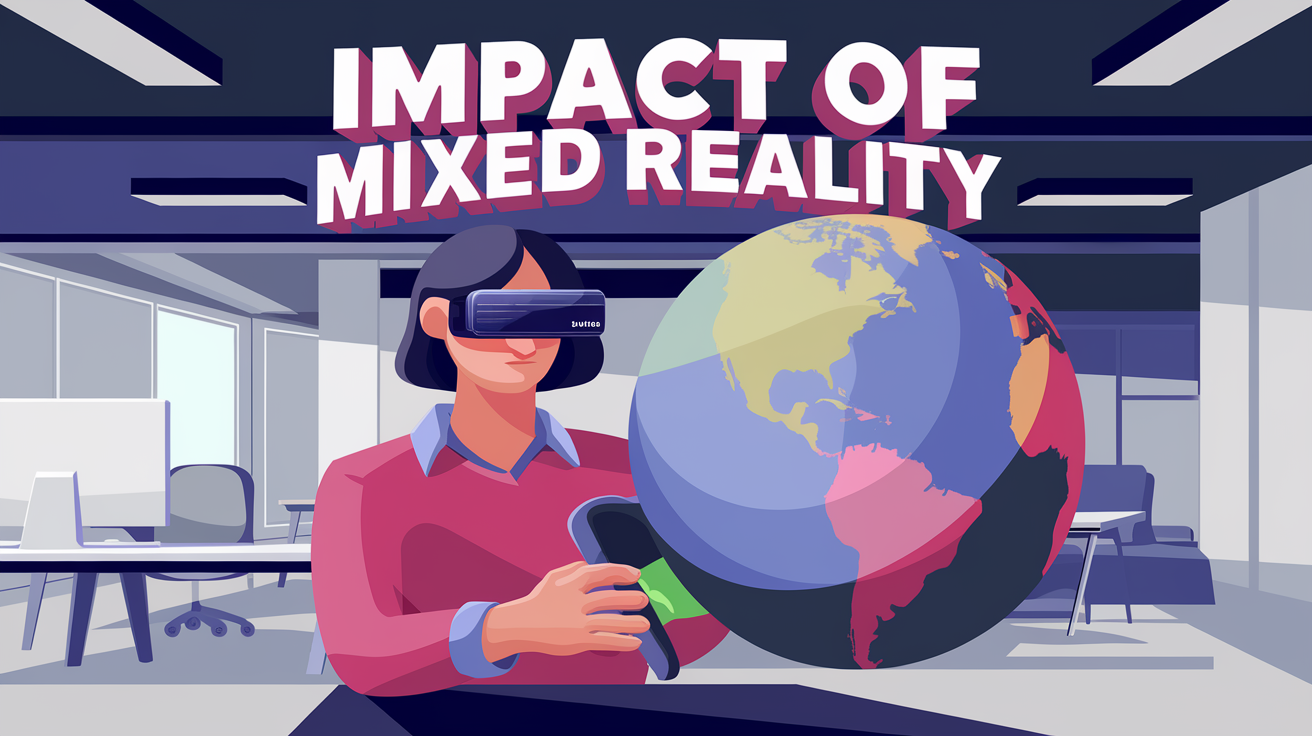
Mixed reality combines elements of VR, which immerses users in fully digital environments, and AR, which overlays digital elements onto the physical world. MR merges real and virtual worlds, enabling interactions between physical and digital objects in real time. In an educational context, MR allows students to interact with a blend of real and virtual objects, providing a unique platform for experiential and hands-on learning.
In 2025, MR has evolved to be highly interactive and accessible. The hardware, including MR headsets and haptic feedback devices, has become more affordable and comfortable, while software advances enable seamless integration with various subjects and curriculums. This convergence of accessibility and technological sophistication has catalyzed MR’s integration into education at all levels.
2. The Educational Potential of Mixed Reality
Enhancing Engagement and Motivation
One of the core benefits of MR in education is its ability to create immersive, engaging experiences. Traditional learning methods, which often rely on textbooks and lectures, can sometimes fail to capture students’ interest. MR, on the other hand, places students in the heart of the learning process. They are not merely passive recipients of information; they become active participants.
For example, history students can “visit” ancient civilizations, explore the Roman Colosseum, or walk through the streets of a medieval European village. Science students can observe and manipulate the structure of atoms, explore the human body’s inner workings, or witness astronomical phenomena up close. This level of immersion fosters a deep engagement with the material, making learning more memorable and enjoyable.
Facilitating Experiential Learning
MR enables experiential learning, where students learn by doing. This hands-on approach is invaluable for subjects that benefit from practical application. For instance, medical students in MR environments can perform virtual surgeries, practice diagnosis, and engage in simulations that closely mimic real-life situations. Similarly, engineering students can build and test prototypes in a virtual space, experimenting without the need for costly materials or lab facilities.
This experiential element of MR makes complex or abstract concepts tangible. It allows students to learn through trial and error in a safe, controlled environment, reducing the fear of making mistakes. This practical, interactive learning reinforces theoretical knowledge, making it easier for students to retain information and apply it in real-world contexts.
3. Personalized Learning Paths and Inclusivity
Customized Learning Experiences
Mixed reality can adapt to individual learning styles and paces. By analyzing a student’s interaction patterns within MR environments, educational platforms can tailor content to fit their specific needs. This personalization is particularly useful for students who might struggle with conventional approaches, as MR can provide alternative methods to grasp challenging subjects.
For example, visual learners might benefit from AR overlays that demonstrate complex processes, while kinesthetic learners can interact with 3D objects, manipulating them to understand spatial relationships. Students can progress at their own pace, allowing for a more comfortable and effective learning experience. The ability to customize content aligns with the growing emphasis on personalized education, empowering students to take charge of their learning journey.
Promoting Inclusivity in Education
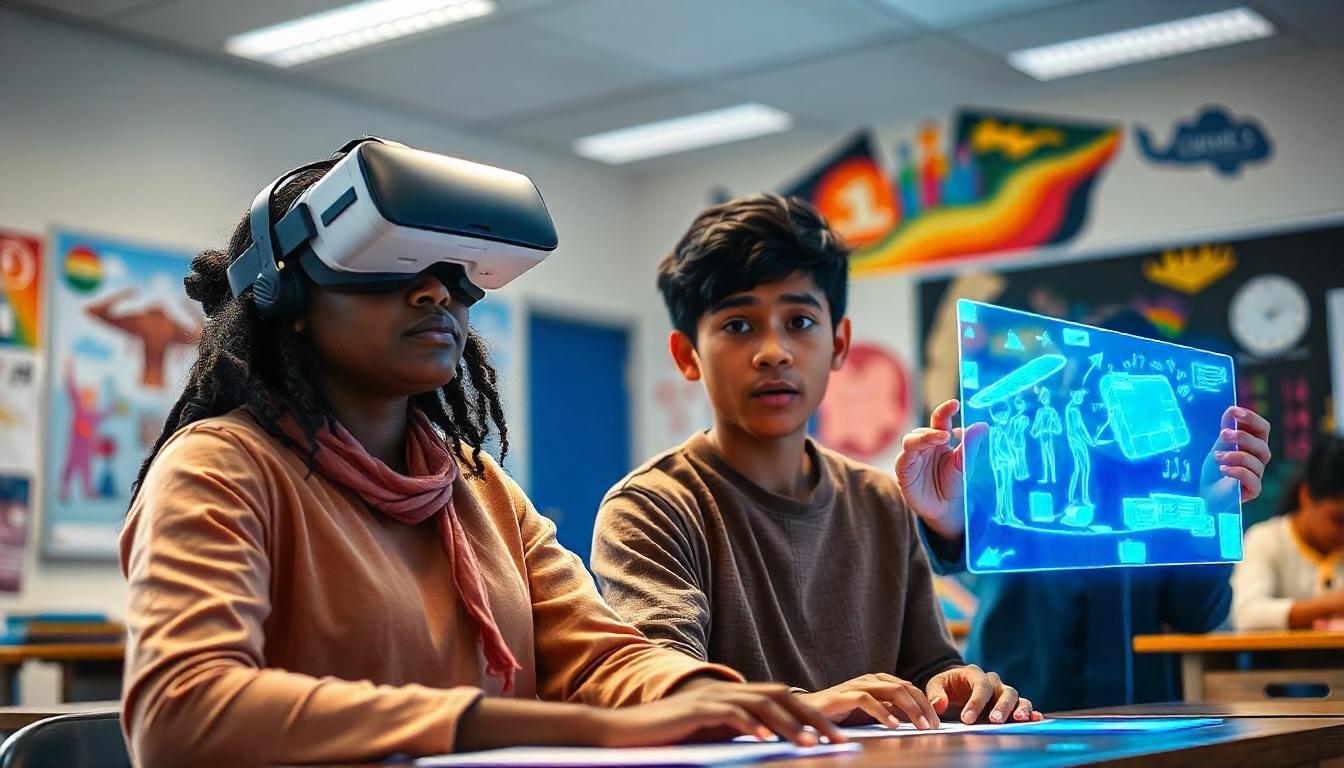
Mixed reality also enhances accessibility, making learning more inclusive. Students with disabilities can benefit greatly from MR’s adaptive technologies. For instance, MR can offer virtual field trips to students who are unable to physically participate due to mobility issues. Additionally, students with hearing impairments can access real-time visual captions or sign language avatars, while those with visual impairments can use tactile and audio feedback to interact with MR environments.
In 2025, MR is helping to bridge educational gaps by providing equitable access to immersive learning experiences for students with diverse needs. This inclusive approach fosters a learning environment where all students, regardless of physical or cognitive limitations, can engage with educational content in a meaningful way.
4. Expanding Teacher Capabilities
Enhanced Instructional Tools
Teachers are also benefiting from the integration of MR in education. Instructors can use MR to create dynamic and interactive lessons, enabling them to illustrate complex concepts that are difficult to convey through traditional methods. For example, in a geography class, a teacher can transport students to different ecosystems worldwide, showing real-time environmental changes. In mathematics, teachers can use 3D visualizations to help students better understand abstract concepts, such as geometric shapes or calculus.
Moreover, MR offers teachers valuable feedback on student performance and engagement, allowing them to identify areas where students may be struggling. This data-driven insight helps teachers to tailor their instruction and provide targeted support, enhancing the overall learning experience.
Collaborative Learning and Peer Interaction
MR promotes collaborative learning, an important aspect of modern education. Students can engage in virtual group activities, regardless of their physical location. These collaborative MR experiences allow for real-time interactions within a shared virtual space, where students can discuss, problem-solve, and work on projects together.
For instance, in a language class, students from different countries can participate in virtual language exchanges, immersing themselves in another culture while practicing language skills with native speakers. In a science lab, students can conduct experiments together in MR, each contributing unique insights and observations. This collaborative environment not only enhances learning but also fosters social skills and cross-cultural understanding, preparing students for a globalized workforce.
5. Overcoming Challenges: Technical, Ethical, and Financial
Technical Barriers and Infrastructure
Despite the benefits, MR in education faces significant challenges. First, the technical requirements for MR – including stable internet connectivity, compatible devices, and technical support – can be a barrier, particularly in under-resourced schools. In rural or economically disadvantaged areas, limited infrastructure and funding may hinder the widespread adoption of MR.
To address these disparities, governments, educational institutions, and tech companies are working on solutions, such as affordable MR hardware, cloud-based MR applications, and shared resources. These initiatives aim to reduce the digital divide and ensure that all students have access to MR-enhanced learning opportunities.
Ethical and Privacy Considerations
The use of MR in education also raises ethical questions, particularly concerning privacy and data security. MR applications collect large amounts of data on student interactions, which can be valuable for personalizing learning experiences. However, this data also poses privacy risks if not properly protected. Educational institutions must implement strict data security measures and transparent policies to safeguard student information.
Furthermore, there are concerns about the potential for addiction or over-reliance on MR, especially among younger students. Prolonged use of MR devices can lead to health issues, such as eye strain and mental fatigue. To mitigate these risks, educators and policymakers are establishing guidelines on screen time, device usage, and safe MR practices.
Financial Considerations
The initial investment in MR hardware and software can be substantial, creating financial challenges for schools. In response, tech companies are increasingly offering education-specific MR solutions at discounted rates, and some governments are providing grants to support MR adoption. Additionally, some institutions are exploring cost-effective alternatives, such as mobile-based MR applications, which can offer a similar level of immersion without the need for expensive headsets.
6. The Future of Education: Long-term Implications
The rise of MR in education signals a shift toward a more experiential, interactive, and student-centered approach to learning. As MR technology continues to evolve, its applications in education will expand, opening new doors for lifelong learning, remote education, and workforce training. The potential of MR to democratize access to high-quality education, bridge cultural divides, and foster global collaboration is transformative.
In the long term, MR in education will help cultivate a generation of learners who are not only more knowledgeable but also more adept at problem-solving, critical thinking, and adapting to change. These skills are crucial in a world where technological advancements are rapidly reshaping job markets and social landscapes. Furthermore, MR’s potential to make education more inclusive will contribute to building a more equitable society, where learning is accessible to all, regardless of background or ability.
Conclusion: Embracing a New Era of Learning
The impact of mixed reality on education in 2025 is profound, offering immersive learning experiences that were once unimaginable. By enhancing engagement, supporting personalized learning, promoting inclusivity, and expanding teacher capabilities, MR is setting a new standard for educational innovation. Although challenges remain, the benefits far outweigh the obstacles, making MR a powerful tool in shaping the future of education.
As we embrace this new era of learning, it is essential for educators, institutions, and policymakers to work together to overcome the challenges and maximize the potential of MR. Through careful planning, ethical considerations, and a commitment to inclusivity, MR in education