Augmented Reality in Retail: Enhancing Shopping Experiences in 2025
Augmented Reality in Retail: Enhancing Shopping Experiences in 2025
The retail landscape is constantly evolving, and augmented reality (AR) has emerged as a key technology shaping how we shop, engage, and interact with brands. By 2025, AR has become a powerful tool in retail, merging the digital and physical worlds to create immersive, personalized, and seamless shopping experiences. From virtual try-ons to interactive store displays, AR is enabling retailers to connect with customers in more engaging and innovative ways than ever before.
This blog explores the applications of AR in retail, its impact on customer experience, and the trends and challenges shaping its future in 2025.
1. The Evolution of AR in Retail
AR technology in retail began as a novel concept, often seen in mobile apps and limited to promotional campaigns. However, advancements in AR technology, faster mobile networks (like 5G and upcoming 6G), and the proliferation of AR-capable devices have enabled retailers to integrate AR into nearly every stage of the shopping experience.
In 2025, AR has transformed from a “nice-to-have” feature into a core component of the retail experience. From e-commerce platforms to physical stores, AR has become a key differentiator for brands looking to capture customer attention, improve convenience, and build loyalty.
2. Key Applications of Augmented Reality in Retail
Virtual Try-Ons and Fitting Rooms
One of the most popular uses of AR in retail is the virtual try-on experience. In 2025, customers can use AR to see how products – such as clothing, accessories, or cosmetics – will look on them without physically trying them on. Through smartphone cameras or AR-equipped mirrors in stores, shoppers can view how different shades of lipstick look on their face or see how a particular outfit fits their body type in real-time.
For fashion retailers, virtual fitting rooms powered by AR technology are standard in both online and in-store environments. This allows customers to experiment with different styles and sizes, reducing the likelihood of returns and enhancing customer satisfaction.
Interactive Product Visualization
AR enables customers to view products in their real-world environment, a feature particularly useful in the furniture and home decor industry. In 2025, AR-enabled apps allow users to visualize how a sofa, painting, or dining table would look in their living room by projecting a 3D model of the item into their space through their mobile device. This interactive visualization helps customers make more informed purchasing decisions and eliminates the guesswork associated with online shopping.
For example, a customer shopping for a new couch can use an AR app to place a 3D model of the couch in their living room, rotating and resizing it to see if it fits with their decor and spatial dimensions. This enhances the shopping experience, making it easier for customers to make confident purchasing decisions.
Personalized In-Store Experiences
AR in physical stores creates personalized shopping journeys, blending digital content with the physical shopping environment. AR-equipped smart mirrors allow customers to see recommendations for complementary items as they try on products. Additionally, customers can use their smartphones to scan QR codes or AR markers on shelves to reveal product information, reviews, and promotions tailored to their shopping history and preferences.
For example, a customer browsing in a cosmetics store can scan a product with their phone to see virtual tutorials, ingredients, and recommendations for similar products that match their skin tone or style. This personalized in-store experience creates an interactive journey, increasing engagement and providing customers with valuable information to guide their decisions.
Immersive Brand Experiences and Storytelling
AR has enabled brands to bring storytelling to life, creating memorable experiences that go beyond the traditional shopping experience. By 2025, many retailers use AR to engage customers in immersive brand experiences, offering interactive content such as virtual store tours, brand history, or product-making processes.
For example, a luxury handbag brand may offer an AR experience that showcases the craftsmanship involved in producing each bag, allowing customers to appreciate the value of their purchase. These immersive experiences foster a deeper emotional connection to the brand and contribute to a more enriching shopping experience.
Gamification and Loyalty Programs
Gamification is another significant trend in AR retail. By introducing interactive, game-like elements, retailers are able to engage customers in fun and rewarding ways. In 2025, retailers use AR-based games to increase engagement and drive customer loyalty. Shoppers can participate in AR treasure hunts, earn rewards for discovering hidden items in-store, or unlock discounts by completing AR challenges.
Loyalty programs have also evolved, with AR-based features encouraging customers to collect virtual rewards, explore new products, and even share their experiences on social media. For instance, a sportswear brand may invite customers to complete an AR fitness challenge to earn loyalty points redeemable for discounts or exclusive merchandise, creating an interactive, rewarding experience that builds brand loyalty.
Enhanced Customer Support and Assistance
In 2025, AR has transformed customer support by providing instant, on-demand assistance. For instance, customers can point their phones at a product to receive step-by-step instructions on assembly or maintenance. This application is particularly valuable for complex items, such as electronics or furniture, where visual guidance can improve customer satisfaction and reduce returns due to misunderstandings.
Moreover, some stores offer AR-powered personal shopping assistants, where customers can use their phones to scan products and receive real-time guidance from virtual agents. These virtual assistants can answer questions, offer product recommendations, and even guide customers through the store, providing a seamless shopping experience that combines digital convenience with personal support.
3. The Impact of AR on Customer Experience
Increased Convenience and Confidence
AR makes the shopping experience more convenient by enabling customers to try before they buy, view product details instantly, and access real-time assistance. These features increase customer confidence in their purchasing decisions, especially for online shopping, where the inability to physically interact with products can be a barrier. Virtual try-ons and interactive visualizations give customers a clearer sense of how products will work for them, reducing doubts and return rates.
Higher Engagement and Brand Loyalty
AR’s immersive capabilities allow brands to offer more engaging shopping experiences. Interactive content, gamified loyalty programs, and personalized recommendations make shopping more enjoyable and memorable. Customers who have positive, engaging experiences with a brand are more likely to return and recommend the brand to others, fostering loyalty and brand advocacy.
Improved Accessibility and Inclusivity
AR also promotes inclusivity by providing accessible shopping options. Customers with disabilities or mobility issues can use AR to try on products, view products in their environment, and access product information without the need for physical interaction. AR also bridges geographical barriers, allowing customers who can’t visit physical stores to experience products in a similar way to in-store shopping.
4. Challenges Facing AR in Retail in 2025
Technology and Infrastructure Limitations
Despite advancements, AR still relies on advanced hardware, software, and connectivity. In 2025, AR applications depend on high-speed networks (such as 5G or 6G) to support real-time experiences. However, some areas, particularly rural regions, may still lack the necessary infrastructure, limiting access to AR-powered experiences. Additionally, not all consumers have AR-capable devices, which may restrict the technology’s reach.
High Implementation Costs
Developing AR applications and integrating them into retail operations requires significant investment. Costs associated with AR development, content creation, and maintenance can be prohibitive, especially for small and medium-sized retailers. While larger brands are more capable of absorbing these costs, smaller retailers may struggle to leverage AR without adequate financial resources or technological support.
Privacy and Data Security Concerns
AR applications often collect large amounts of data on consumer preferences, behaviors, and shopping history to deliver personalized experiences. However, this data collection raises privacy concerns, as customers may be wary of sharing sensitive information. In 2025, retailers face increasing pressure to ensure that AR applications comply with data protection regulations and that customer information is handled securely and transparently.
User Experience and Usability
While AR offers exciting possibilities, ensuring a seamless and intuitive user experience remains a challenge. If AR interfaces are complicated or fail to function as expected, customers may become frustrated and disengaged. Retailers must invest in user experience (UX) testing to ensure that AR applications are easy to use and integrate smoothly into the shopping journey.
5. The Future of AR in Retail
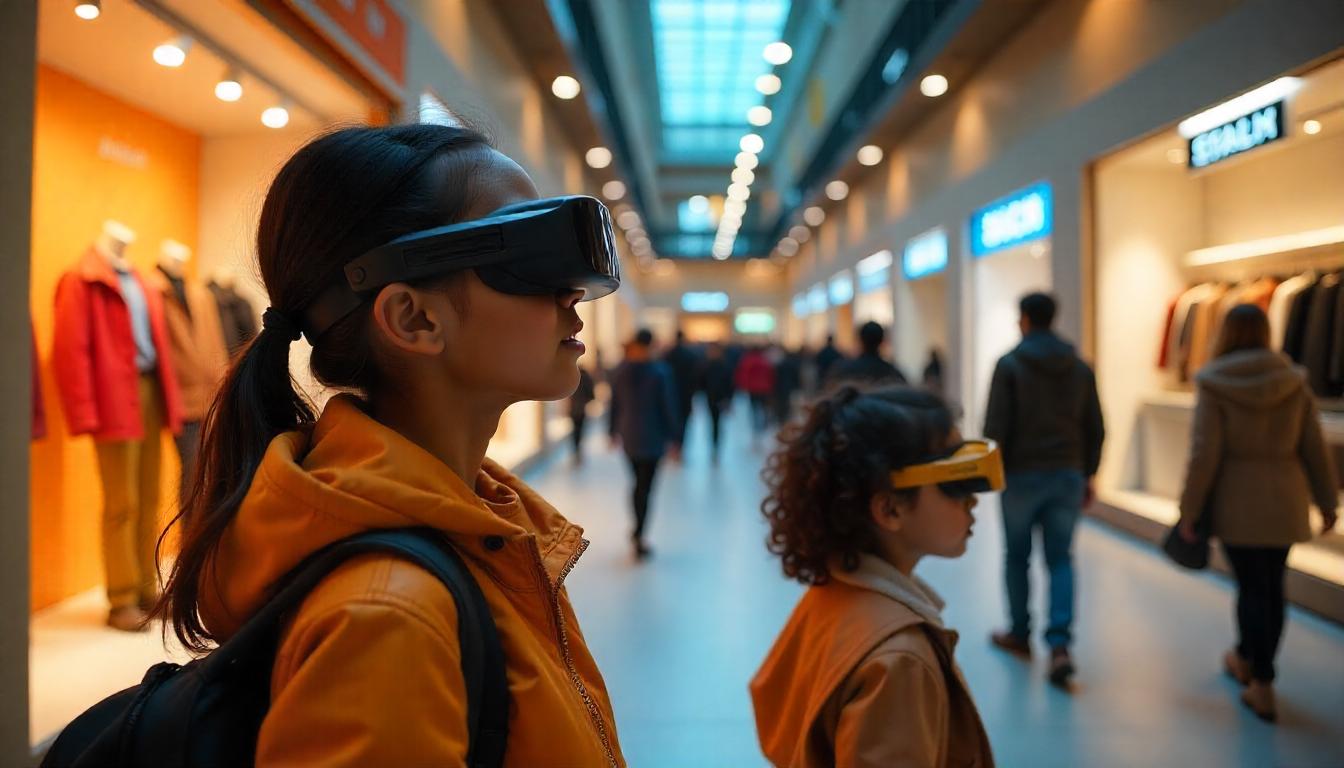
Looking beyond 2025, the potential for AR in retail continues to expand. With advancements in AI and machine learning, AR experiences will become more personalized, adapting to each customer’s preferences and shopping behavior. Additionally, the rise of wearable AR devices, such as smart glasses, may further blur the lines between digital and physical shopping experiences, enabling hands-free, immersive interactions as customers browse products.
As AR technology becomes more accessible and affordable, it is likely to become a standard in retail, making shopping more interactive, convenient, and engaging for all. Retailers who embrace AR and continuously innovate will be well-positioned to thrive in an increasingly competitive retail landscape, attracting customers who value personalized, tech-enhanced shopping experiences.
6. Conclusion
By 2025, augmented reality has cemented its place as a transformative force in retail, reshaping how customers discover, interact with, and purchase products. With applications ranging from virtual try-ons to gamified loyalty programs, AR enables retailers to deliver engaging, personalized, and seamless shopping experiences that cater to the needs and expectations of modern consumers. While challenges remain, the potential for AR to revolutionize retail is undeniable, and forward-thinking brands are leveraging this technology to build stronger connections with customers and gain a competitive edge in the marketplace.
As AR continues to evolve, its role in shaping the future of retail will only grow, offering exciting opportunities for innovation and transformation in the years ahead.