
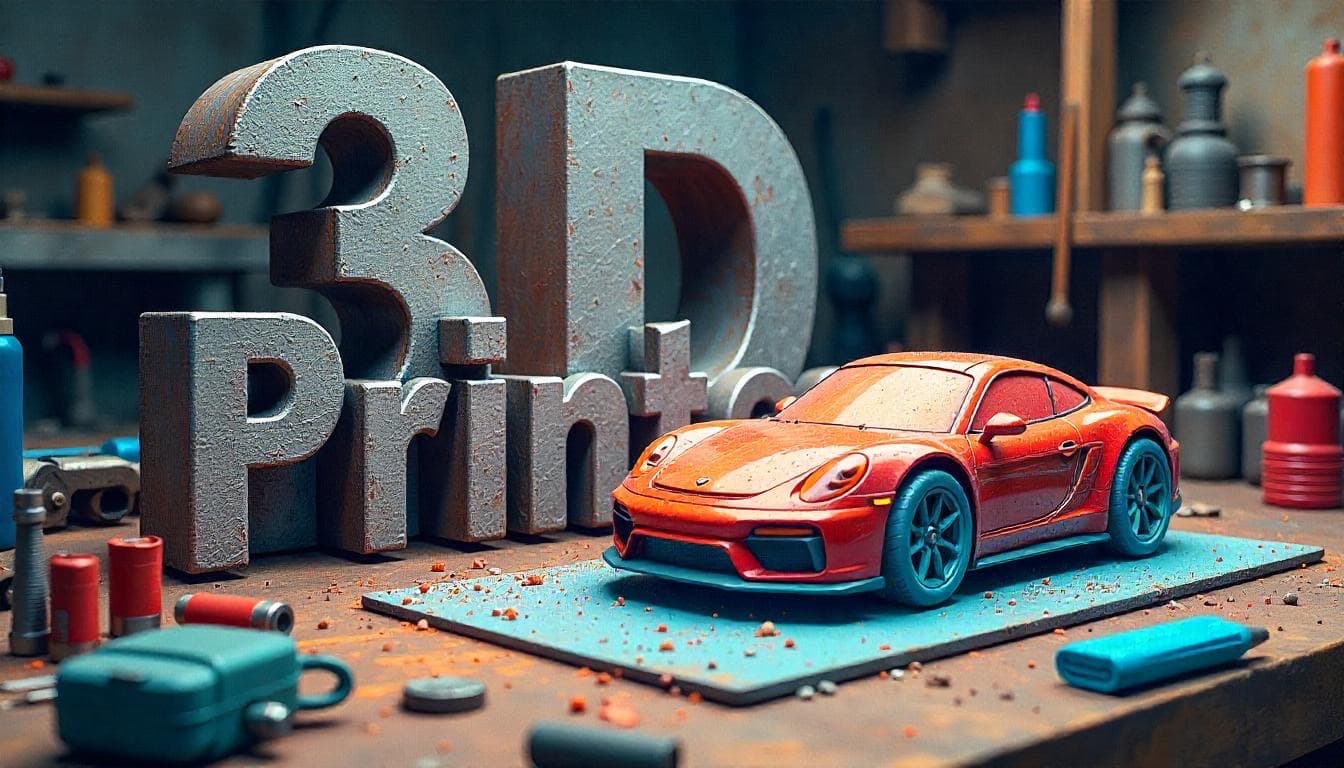
3D Printing Technology: Innovations in Manufacturing in 2025
3D Printing Technology: Innovations in Manufacturing in 2025
As we step into 2025, 3D printing, or additive manufacturing, has matured from a niche prototyping tool to a full-fledged manufacturing solution revolutionizing multiple industries. From aerospace to healthcare, 3D printing is providing unprecedented design freedom, customization, speed, and sustainability in manufacturing. With recent innovations in materials, scalability, and integration with AI, 3D printing is now capable of addressing complex manufacturing needs, disrupting traditional supply chains and enabling on-demand production. This article explores the latest advancements in 3D printing technology, its applications, and its transformative role in the manufacturing landscape of 2025.
Key Innovations in 3D Printing Technology in 2025
Over the last few years, 3D printing has evolved significantly in terms of materials, precision, and accessibility. Here are some of the most notable innovations that have shaped 3D printing in 2025:
1. Advanced Materials: From Metals to Biocompatible Polymers
In 2025, 3D printing technology supports a wider array of materials than ever before. Initially limited to plastic filaments, the industry now includes materials like high-strength metals, ceramics, biocompatible polymers, and even composites that blend multiple materials into a single print. Key advancements in materials include:
- High-Performance Metals: Aerospace and automotive industries increasingly use 3D-printed metals like titanium, aluminum, and nickel alloys for parts that require high strength and thermal resistance. Laser-based metal printing has improved in precision, creating highly detailed metal components that can withstand extreme conditions.
- Biocompatible and Biodegradable Polymers: In healthcare, biocompatible polymers are used to create custom prosthetics, implants, and surgical tools, allowing for patient-specific solutions. Additionally, biodegradable materials reduce waste, supporting the industry’s move towards sustainable manufacturing.
- Conductive and Smart Materials: The development of conductive materials for 3D printing has enabled the production of smart devices with embedded sensors or circuitry. These materials are crucial for industries like electronics and wearable tech, where customization and compact design are in high demand.
2. Multi-Material and Multi-Color Printing
Advances in multi-material and multi-color 3D printing allow manufacturers to create complex products with multiple materials and colors in a single build, reducing post-processing and assembly times. Printers can now incorporate different types of materials—like flexible polymers and rigid plastics—into a single object, offering greater design flexibility and making it easier to produce intricate, multi-functional parts.
This innovation is particularly useful in industries like footwear, where manufacturers can print shoes with soft inner layers, firm outer shells, and embedded decorative elements. Similarly, consumer electronics companies use multi-material 3D printing to create complex components with varying properties, such as flexible connectors and rigid housings, in a single step.
3. AI-Driven Design and Topology Optimization
AI has become an essential partner in 3D printing, especially in complex part design and topology optimization. AI algorithms help engineers optimize parts for minimal weight, material efficiency, and maximum strength by generating structures that would be impossible to produce using traditional methods. With AI, manufacturers can create designs that require fewer materials but maintain structural integrity, leading to lighter and stronger components.
Topology optimization powered by AI is especially valuable in the aerospace and automotive industries, where weight reduction directly impacts fuel efficiency. For instance, AI-driven designs are used to produce aircraft components with intricate internal structures that minimize material usage while maintaining performance.
4. Large-Scale 3D Printing for Construction and Infrastructure
In 2025, 3D printing has scaled up to produce entire buildings and infrastructure components. Construction companies now use large-scale 3D printers to print concrete structures on-site, reducing labor costs, waste, and construction time. This technology is particularly beneficial in remote or disaster-stricken areas where access to traditional building materials and equipment is limited.
3D-printed buildings are also more sustainable, as they use materials optimized for low waste and energy efficiency. In addition, 3D printing allows for complex architectural designs that can incorporate features for natural light and ventilation, improving energy efficiency and reducing long-term costs.
5. 4D Printing: Adaptive and Responsive Materials
The emergence of 4D printing, where printed objects change shape or properties in response to external stimuli, is another significant advancement in 2025. Using materials engineered to respond to environmental changes like temperature, humidity, or light, 4D-printed objects can adapt to different conditions. For example, a 4D-printed structure could expand or contract based on humidity levels, making it valuable in applications like packaging, medical devices, and aerospace.
In healthcare, 4D printing is being explored for creating stents and implants that can change shape within the body, adapting to patients’ needs over time. This innovation is still in its early stages but promises to open up new possibilities in adaptive manufacturing.
6. Hybrid Manufacturing: Combining 3D Printing with Traditional Methods
Hybrid manufacturing, which integrates 3D printing with traditional manufacturing methods, is becoming more common in 2025. By combining additive and subtractive techniques, manufacturers can produce parts that require both complex geometries and high-precision finishing. This approach is especially useful for industries that demand high tolerance levels and quality finishes, such as aerospace, medical, and automotive.
For instance, a part might be initially printed for its structural complexity, then refined with CNC machining to achieve precise tolerances. Hybrid manufacturing also allows for adding custom features to traditionally manufactured parts, enhancing flexibility and customization without requiring entirely new production processes.
7. Sustainable and Zero-Waste 3D Printing
Sustainability is a top priority for manufacturers, and 3D printing has made strides in this area. 3D printing produces less waste than traditional subtractive manufacturing, but innovations in 2025 take it even further. Some companies are now using fully recyclable materials or bio-based polymers to reduce environmental impact.
Recyclable filaments and closed-loop systems enable manufacturers to reuse leftover materials and reduce the overall environmental footprint. Additionally, the ability to print on demand reduces the need for large-scale inventory, cutting down on both material usage and storage costs. These eco-friendly approaches make 3D printing an attractive option for companies looking to meet sustainability goals.

Applications of 3D Printing in Manufacturing
3D printing’s versatility has led to a wide range of applications across multiple industries. Here are some of the most transformative uses of 3D printing in 2025:
1. Aerospace and Defense
The aerospace industry has long embraced 3D printing due to its ability to create lightweight, high-strength parts. In 2025, the industry relies heavily on 3D printing for producing complex, optimized components for aircraft, drones, and satellites. AI-driven design and topology optimization enable the production of parts that meet strict weight and strength requirements, enhancing fuel efficiency and payload capacity.
In defense, 3D printing allows for rapid prototyping and on-demand production of critical parts, reducing lead times and minimizing reliance on global supply chains. This flexibility is invaluable in remote locations, where parts can be printed as needed without waiting for traditional logistics channels.
2. Healthcare and Medical Devices
In healthcare, 3D printing is used to produce customized medical devices, implants, prosthetics, and even tissue scaffolds for regenerative medicine. Patient-specific implants, such as dental crowns or joint replacements, are designed to match each patient’s unique anatomy, improving comfort and effectiveness.
Furthermore, 3D bioprinting—the process of printing human tissue—is advancing in 2025, with researchers developing techniques for printing complex tissue structures that can support cell growth. While printing fully functional organs is still a distant goal, 3D bioprinting has significant potential for regenerative medicine, drug testing, and surgical training.
3. Automotive Industry
In the automotive industry, 3D printing is employed for rapid prototyping, small-batch production, and producing lightweight parts that improve vehicle performance. In 2025, automotive companies use 3D printing for end-use parts, especially for electric vehicles, where lightweight components are essential for maximizing battery life and range.
Additionally, 3D printing allows for greater customization in the automotive market. Car manufacturers can offer custom interiors and exteriors tailored to individual customer preferences, giving them a competitive edge in a market that increasingly values personalization.
4. Consumer Goods and Electronics
Consumer goods companies use 3D printing to produce customized products on demand, allowing for unique, limited-edition designs that appeal to consumers. Electronics manufacturers utilize 3D printing to create complex, miniaturized components, such as printed circuit boards and connectors, reducing the size and weight of electronic devices.
Moreover, 3D printing’s ability to create prototypes quickly and economically accelerates the development cycle for new products, helping companies bring innovations to market faster than traditional methods would allow.
5. Construction and Architecture
As mentioned earlier, large-scale 3D printing has transformed construction by enabling faster, more efficient, and sustainable building practices. Architects use 3D printing for creating intricate models and experimenting with complex geometries that are difficult to achieve using traditional techniques.
In addition to individual structures, 3D printing is being used for infrastructure components like bridges, paving stones, and even prefabricated building elements. These advancements allow for modular construction, where components are printed off-site and assembled on location, reducing waste and construction times.
Conclusion: The Future of Manufacturing with 3D Printing
The transformative power of 3D printing in 2025 lies in its ability to combine efficiency, flexibility, and sustainability. By continuing to push the boundaries of materials, design, and scalability, 3D printing is redefining the manufacturing landscape across industries. As the technology evolves, we can expect to see even greater integration with AI, robotics, and other emerging technologies, paving the way for smarter, more adaptive manufacturing solutions.
Whether it’s producing lightweight aerospace parts, customized medical devices, or entire buildings, 3D printing is shaping the future of manufacturing, one layer at a time.