
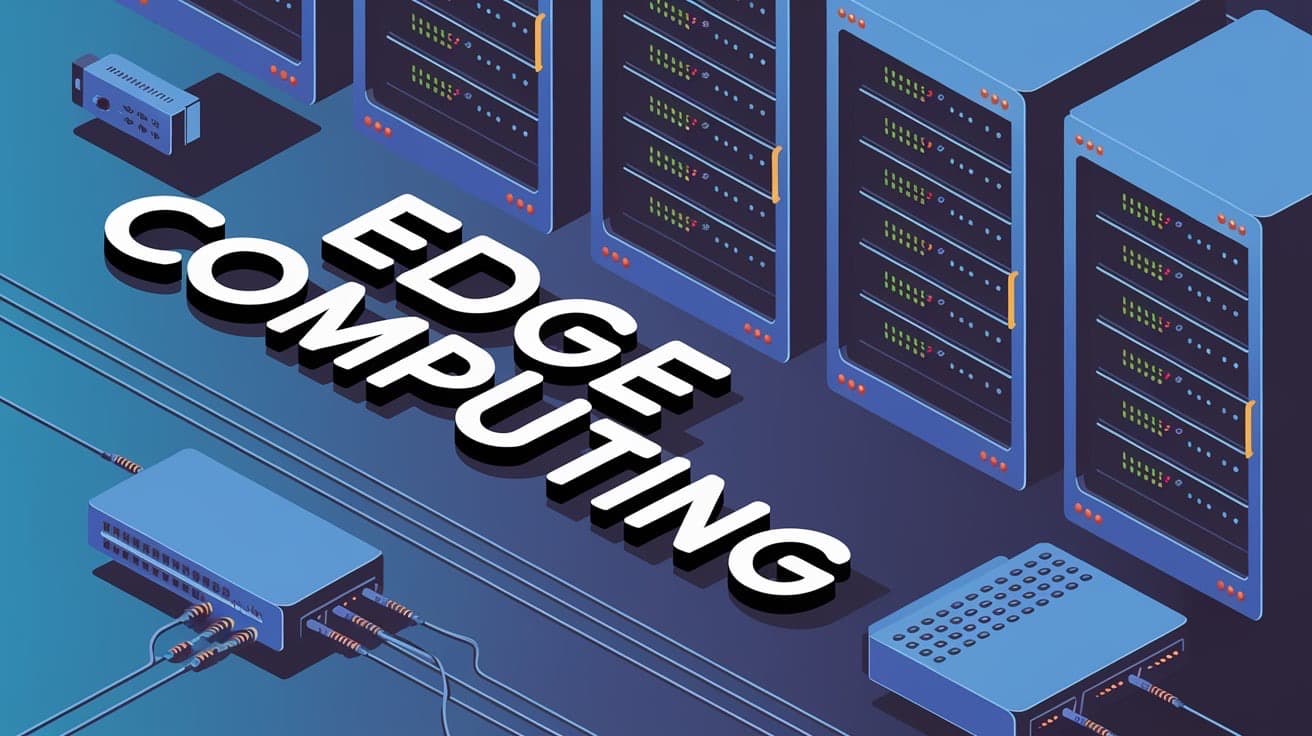
Top Trends in Edge Computing and Its Applications in 2025
Top Trends in Edge Computing and Its Applications in 2025
Introduction: The Rising Importance of Edge Computing
The demand for instantaneous data processing and analysis is greater than ever. As the world becomes increasingly connected, traditional centralized cloud infrastructure alone cannot meet the needs of industries that require low latency, high-speed data processing, and secure access at the device level. This is where edge computing comes in, an approach that processes data closer to the source — at the network’s edge. Edge computing enables real-time insights and improved data management, making it crucial for sectors like manufacturing, healthcare, retail, and telecommunications.
By 2025, edge computing is expected to be one of the most impactful technological advancements, ushering in a new era of rapid data processing and advanced applications. Here, we’ll explore the top trends in edge computing expected to dominate in 2025 and the transformative applications this technology will bring.
1. AI and Machine Learning Capabilities at the Edge
Trend Overview
Artificial Intelligence (AI) and Machine Learning (ML) at the edge allow for real-time data processing, decision-making, and automation without requiring constant connectivity to central cloud servers. By bringing AI to the edge, industries can analyze data immediately at the source, providing faster responses and minimizing the load on network bandwidth.
Applications in 2025
- Manufacturing: Smart factories will use edge AI to monitor production lines, detect anomalies, and predict machinery failures. For example, sensors on factory equipment can detect irregularities, allowing predictive maintenance that prevents costly breakdowns.
- Healthcare: In hospitals, edge devices equipped with AI will analyze patient data in real-time, assisting in diagnosis and treatment recommendations, especially in emergency scenarios where rapid decision-making is critical.
- Retail: Edge AI will enhance the in-store shopping experience by analyzing customer preferences in real-time, providing personalized recommendations, managing stock levels, and even adjusting promotions based on foot traffic.
Future Impact
By 2025, edge AI will be an integral part of enterprise-level operations, supporting critical real-time applications that demand instant analytics and responses. With advanced machine learning models running locally, edge computing will not only improve decision-making speed but also reduce dependency on central cloud processing.
2. Enhanced Security and Privacy Protocols for Edge Networks
Trend Overview
As more data is processed at the edge, the potential for cybersecurity vulnerabilities increases. Traditional centralized security models are inadequate for edge computing, where data is spread across various devices and locations. In response, new security measures will be designed specifically for the edge, prioritizing both data protection and user privacy.
Applications in 2025
- Zero-Trust Security: By 2025, edge networks will increasingly adopt zero-trust architectures, requiring authentication for every user and device interaction. This “never trust, always verify” approach is crucial for industries like finance and healthcare, where data security is paramount.
- Decentralized Security Protocols: AI-driven threat detection and blockchain technology will enable edge devices to secure data locally, reducing the risks of breaches and cyberattacks. For instance, financial institutions processing transactions at the edge can use decentralized protocols to ensure that sensitive data remains protected.
- Data Compliance: Industries handling sensitive data, such as healthcare and finance, will need to meet strict regulatory standards. Edge computing solutions will embed compliance protocols within edge devices, ensuring data privacy even when processing is decentralized.
Future Impact
By adopting robust security frameworks, edge computing will become more secure, enabling it to handle sensitive information across industries. This shift will increase trust in edge solutions, especially for industries with stringent regulatory requirements.
3. The Role of 5G in Enabling Edge Computing Applications
Trend Overview
5G’s high-speed, low-latency network capabilities will revolutionize edge computing, allowing massive data transfers and enabling more sophisticated applications. By 2025, 5G and edge computing will become inseparable, creating new possibilities for real-time applications across industries.
Applications in 2025
- Smart Cities: Edge devices equipped with 5G will monitor traffic patterns, control energy usage, and enhance public safety by processing data in real-time. For instance, traffic lights can adjust timing based on real-time traffic flow, optimizing urban mobility.
- Telemedicine: 5G-enabled edge computing will allow for high-quality, real-time video communication and remote diagnostics. Healthcare providers can analyze data from medical devices, enabling remote patient monitoring and even tele-surgeries.
- Industrial Automation: Factories will benefit from 5G’s speed and reliability, enabling seamless interaction between machinery, sensors, and control systems. Edge computing will empower real-time monitoring and adjustments on the factory floor, reducing downtime and improving safety.
Future Impact
The combination of 5G and edge computing will redefine what’s possible with IoT and real-time data applications. In 2025, industries will be able to achieve unprecedented levels of connectivity and efficiency, making 5G a crucial enabler for edge advancements.
4. Growth of Edge Data Centers and Micro Data Centers
Trend Overview
With the demand for edge computing on the rise, micro data centers — smaller, localized versions of traditional data centers — will become more common. These edge data centers will provide processing power closer to the data source, reducing latency and enhancing data accessibility.
Applications in 2025
- Retail Chains: Micro data centers will manage and analyze data locally within retail stores, allowing real-time analytics on customer behavior, inventory levels, and sales trends.
- Telecommunications: Telecom companies will deploy edge data centers to handle network demands closer to users, especially in remote or rural areas where centralized data centers are less accessible.
- Energy Management: In sectors like oil and gas, micro data centers will monitor remote field equipment, offering real-time performance data and supporting predictive maintenance.
Future Impact
By 2025, micro data centers will become essential infrastructure for businesses that rely on rapid data processing. These centers will support high-speed data access in industries that require local processing capabilities, such as retail, telecom, and utilities.
5. Real-Time Analytics and IoT Advancements
Trend Overview
Edge computing will be integral to the future of IoT, enabling real-time data analytics that supports a vast ecosystem of connected devices. As IoT devices continue to proliferate, edge computing will make it possible to manage and analyze data in real-time, improving decision-making and operational efficiency.
Applications in 2025
- Smart Homes and Buildings: IoT sensors connected to edge servers will manage and optimize energy usage, lighting, and security systems based on real-time data from residents.
- Supply Chain Management: In logistics, edge computing will track inventory levels and shipping conditions in real-time, allowing businesses to respond quickly to supply chain disruptions.
- Environmental Monitoring: Edge IoT solutions will process data from sensors monitoring environmental conditions like air quality and water levels, facilitating rapid response to natural disasters and climate challenges.
Future Impact
By 2025, edge computing will drive the IoT ecosystem forward, enabling faster, more accurate analytics across sectors. Real-time data from IoT devices will help companies optimize operations, improve customer experiences, and enhance resource management.
6. Edge Computing in Augmented Reality (AR) and Virtual Reality (VR)
Trend Overview
Edge computing will support AR and VR experiences, making them faster, more immersive, and accessible across various devices. Processing data at the edge reduces latency, which is essential for real-time applications in AR and VR.
Applications in 2025
- Retail: Retailers will offer virtual try-ons and product visualizations using AR, processed locally to create responsive, engaging customer experiences.
- Training and Education: Edge computing will enhance VR training modules for industries like healthcare and manufacturing, allowing trainees to practice in immersive, simulated environments.
- Remote Collaboration: Edge-powered AR/VR will transform remote work, enabling real-time, interactive virtual meetings where participants feel like they’re physically together.
Future Impact
In 2025, AR and VR applications will rely on edge computing to deliver seamless and responsive experiences. From remote work to interactive shopping, edge computing will bring AR and VR to the forefront, allowing users to engage in real-time, immersive environments with minimal latency and enhanced performance.
Conclusion: The Future of Edge Computing
Edge computing is poised to reshape the technological landscape in 2025, bringing real-time data processing, enhanced security, and new possibilities for AI, IoT, and immersive technologies. The combination of 5G, AI-driven applications, and edge-enabled security protocols will make this technology indispensable across industries. With edge computing, we are not only looking at faster decision-making and smarter devices, but also the evolution of how we connect, interact, and innovate in the digital world. As we move into 2025, the trends outlined above will continue to unlock the true potential of edge computing, pushing the boundaries of what’s possible.