How AR and VR are Reshaping Entertainment and Education
How AR and VR Are Reshaping Entertainment and Education
Augmented Reality (AR) and Virtual Reality (VR) are transforming the way we experience the world, offering immersive and interactive environments that were once only possible in science fiction. These technologies are creating new possibilities for how we entertain, educate, and interact with digital content. By blending the physical and digital worlds, AR and VR are not only revolutionizing industries like gaming and film but also reshaping how we learn and teach in education.
Understanding AR and VR
Before diving into their impact, it’s important to understand the key differences between AR and VR.
- Augmented Reality (AR) enhances the real world by overlaying digital content such as images, sounds, or interactive data onto a live view, usually through a smartphone, tablet, or AR glasses. The real-world environment remains visible and interacts with the digital elements.
- Virtual Reality (VR), on the other hand, immerses users in a fully digital environment, cutting them off from the real world. With VR headsets, such as the Oculus Rift or HTC Vive, users are transported into a completely virtual space where they can interact with a 3D environment in real-time.
Both technologies have unique strengths and applications, but together, they are reshaping the landscape of entertainment and education in profound ways.
AR and VR in Entertainment
The entertainment industry has been one of the earliest adopters of AR and VR technologies. From video games and movies to live events and social experiences, AR and VR are fundamentally changing how audiences engage with content.
1. Immersive Gaming
One of the most well-known applications of VR is in the gaming industry. VR gaming offers a level of immersion that traditional video games cannot match. Players can step into a fully interactive virtual world, move around within it, and engage with characters and objects as if they were physically present. Games like Beat Saber and Half-Life: Alyx have showcased the potential of VR, offering players a first-person, 360-degree experience.
AR gaming, popularized by mobile games like Pokémon GO, brings the action into the real world by allowing players to interact with virtual elements layered onto their physical environment. The combination of real-world exploration and digital interaction creates a unique blend of experiences that appeal to a wide range of audiences. As AR hardware continues to improve, such as AR glasses becoming more mainstream, these experiences will become even more immersive and socially integrated.
2. Cinema and Interactive Storytelling
VR has also made inroads into the film industry, offering a new medium for storytelling. VR films allow viewers to be part of the story by placing them directly into the scenes, creating a first-person perspective that traditional cinema cannot achieve. VR-based short films, like The Invisible Man and Dear Angelica, immerse audiences in a narrative environment, allowing them to explore scenes at their own pace.
Similarly, AR is enhancing the cinematic experience by offering interactive elements that go beyond the screen. AR apps for smartphones and tablets can be used to unlock behind-the-scenes content, provide real-time translations, or even allow users to interact with characters from the movie. As AR and VR continue to evolve, we can expect to see more hybrid forms of entertainment that blend traditional media with interactive, immersive elements.
3. Live Events and Virtual Concerts
AR and VR are redefining the experience of attending live events, such as concerts, sports games, and theater performances. With VR, users can attend virtual concerts or watch live events from the comfort of their homes, yet still feel as if they are physically present in the venue. For instance, platforms like Oculus Venues allow users to experience live concerts or sporting events in VR, with the option to view from different angles, seats, or even as a participant.
AR has been used to enhance live performances by adding digital effects to concerts, such as holographic images of performers, animated backdrops, or interactive audience features. Major events like the Super Bowl and Coachella have utilized AR technology to create immersive experiences that engage both in-person and remote audiences.
AR and VR in Education
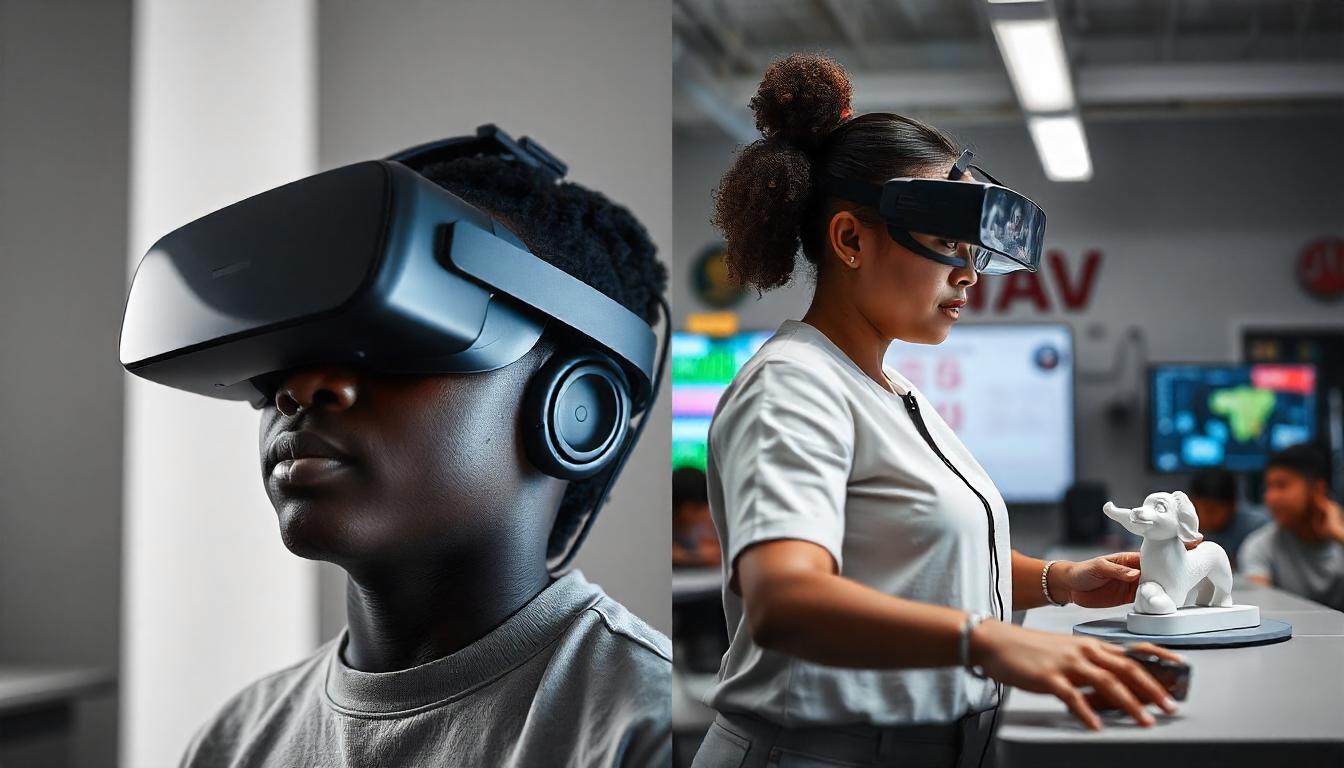
Beyond entertainment, AR and VR have also made significant strides in transforming education. These technologies are offering new ways to engage students, making learning more interactive, experiential, and tailored to individual needs.
1. Immersive Learning Environments
VR provides students with the ability to explore environments that would otherwise be inaccessible or impossible to visit. For example, VR can transport students to ancient Rome, the depths of the ocean, or even inside the human body. This allows students to engage with subjects like history, biology, or geography in an entirely new way.
Programs like Google Expeditions have made virtual field trips possible, allowing students to “travel” to museums, national parks, or outer space, all from within the classroom. This immersive experience promotes active learning, making abstract or complex subjects more tangible and easier to understand.
In fields like medicine or engineering, VR is being used to simulate real-life scenarios that allow students to practice their skills without the risks associated with real-world experimentation. Medical students, for example, can use VR to perform virtual surgeries, learning intricate procedures in a safe and controlled environment before working on actual patients.
2. Interactive and Experiential Learning with AR
AR, on the other hand, is changing how students interact with textbooks and other educational materials. Through AR applications, students can point their smartphones or tablets at printed images or objects, bringing them to life with 3D models, animations, or supplementary information.
For instance, an AR-enabled biology textbook can show a beating heart in 3D when viewed through an AR app, allowing students to rotate and explore its anatomy in real-time. Similarly, AR can turn a simple math problem into a dynamic, interactive equation that changes as students manipulate variables.
In STEM education, AR is proving particularly useful. It allows students to visualize and interact with scientific concepts and processes, from molecular structures to mechanical systems, fostering a deeper understanding through interactive learning.
3. Special Needs and Inclusive Education
AR and VR are also making education more accessible and inclusive. For students with disabilities, these technologies can provide tailored learning experiences that accommodate individual needs. VR can create customized learning environments that are free from distractions, allowing students with attention difficulties to focus better. Similarly, students with mobility challenges can use VR to participate in activities that would otherwise be difficult or impossible.
AR tools are helping students with hearing impairments by providing real-time captioning or translations during lectures. For students with learning difficulties, interactive AR apps can offer alternative ways to engage with material, making learning more fun and effective.
4. Collaborative and Social Learning
VR and AR are also fostering collaboration and social learning by enabling students to engage with each other and their teachers in virtual environments. Virtual classrooms and labs provide spaces where students from around the world can work together, conduct experiments, or even build projects in 3D. Platforms like Mozilla Hubs or Engage VR create virtual spaces where students and educators can meet, collaborate, and learn together, regardless of their physical location.
AR can be used for collaborative projects where students, both in-person and remotely, work on augmented models that they can interact with together in real-time. For example, students can use AR to co-build a virtual model of a historical monument, or to collaborate on a 3D representation of a math problem.
Challenges and Future Potential
While AR and VR hold great promise for reshaping entertainment and education, there are still challenges to overcome. One of the main hurdles is the cost of high-quality VR headsets and AR devices, which can limit access for schools or individuals with limited resources. However, as technology advances and becomes more affordable, these barriers will likely diminish.
Moreover, there are concerns about screen time, particularly in education. With immersive technology, it’s essential to balance engagement with the potential downsides of extended use, such as eye strain or reduced physical activity.
Looking ahead, the future of AR and VR in entertainment and education is bright. As hardware becomes more powerful and affordable, and as developers create more sophisticated and interactive content, these technologies will become more widespread and integrated into our daily lives. In entertainment, we may see entirely new forms of media that blur the lines between physical and virtual worlds, while in education, AR and VR will continue to offer richer, more personalized learning experiences that cater to diverse needs.
Conclusion
AR and VR are not just technologies of the future—they are actively reshaping the present in both entertainment and education. With the ability to create immersive, interactive experiences, these technologies are revolutionizing how we engage with digital content, learn new concepts, and collaborate with others. As AR and VR continue to evolve, their influence will only grow, leading to even more transformative applications in the years to come.