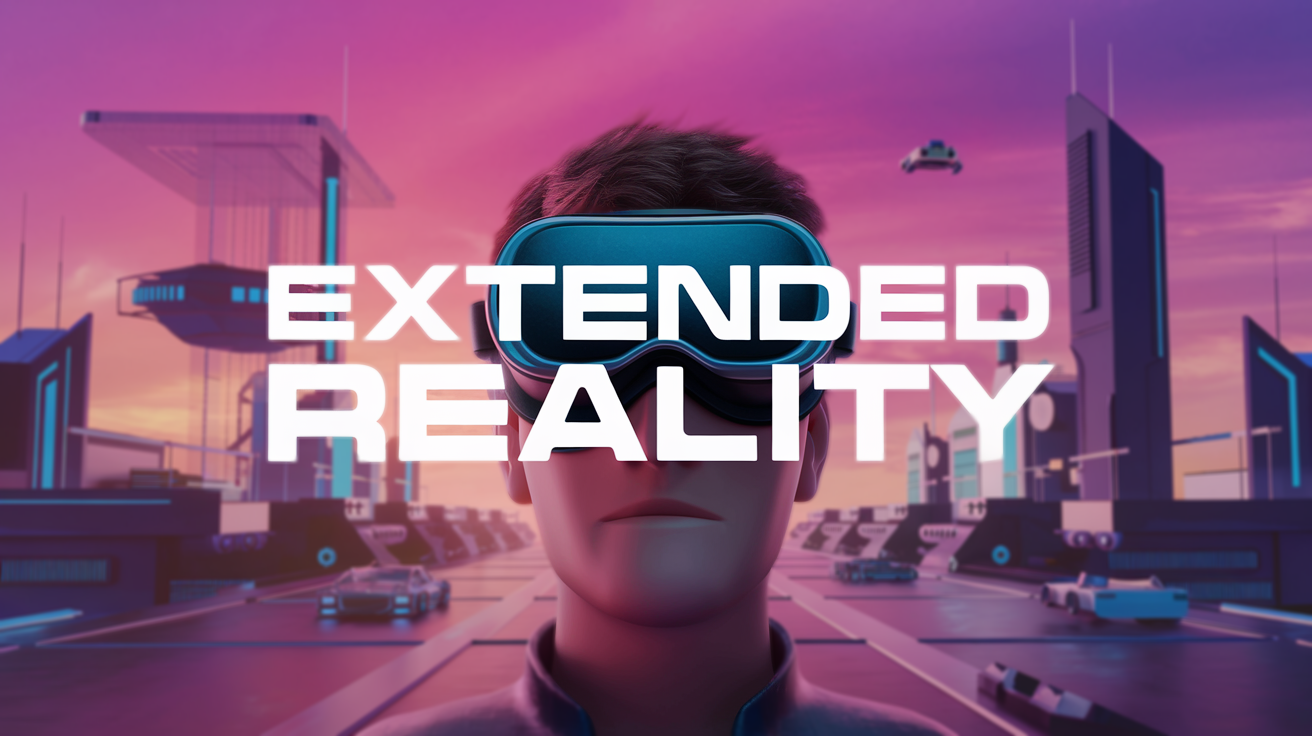
How Extended Reality (XR) Will Shape the Metaverse Experience in 2025
By 2025, Extended Reality (XR)—which encompasses Virtual Reality (VR), Augmented Reality (AR), and Mixed Reality (MR)—will be at the forefront of shaping the metaverse. The metaverse, a virtual network of interconnected spaces for work, socializing, and play, will rely heavily on XR technologies to create a seamless blend of digital and physical worlds. This article explores how XR will shape the metaverse experience in 2025, including the advancements in XR technology, the impact on various sectors, and the challenges that come with integrating XR into the metaverse.
1. Understanding Extended Reality (XR) and the Metaverse
XR refers to immersive technologies that merge the digital and physical realms. Each aspect of XR contributes uniquely to the metaverse:
- Virtual Reality (VR): Completely digital environments for immersive experiences such as gaming, remote work, and social interactions.
- Augmented Reality (AR): Digital elements are overlaid on the real world, allowing users to interact with virtual objects or information within their physical environment.
- Mixed Reality (MR): Combines aspects of VR and AR, where digital objects interact with the physical world in real-time, enabling complex simulations and dynamic environments.
In 2025, XR technologies will be fully integrated into the metaverse, providing users with highly interactive, lifelike experiences that merge virtual and physical spaces.
2. Key Advancements in XR Technology Shaping the Metaverse in 2025
Several advancements in XR technology are making metaverse experiences more immersive, accessible, and realistic by 2025.
Lightweight, High-Performance XR Headsets
In 2025, XR headsets will be lighter, more comfortable, and more powerful, making extended use feasible for a wide range of applications. These headsets will feature higher resolution displays, wider fields of view, and faster refresh rates, creating more lifelike and immersive experiences with minimal motion sickness. Advanced XR headsets will also be wireless and equipped with extended battery life, making them ideal for prolonged engagement in the metaverse.
Improved Haptic Feedback and Tactile Experiences
Haptic feedback technology will advance significantly by 2025, allowing XR devices to deliver realistic sensations of touch and texture in the metaverse. Haptic gloves, suits, and even full-body sensors will enable users to feel virtual objects and environmental elements like temperature and pressure. This tactile dimension of XR will enhance interactions with virtual objects and avatars within the metaverse.
Advanced Spatial Audio and Voice Recognition
Spatial audio technology will reach new levels of precision, providing immersive, three-dimensional soundscapes that enhance the realism of the metaverse. By 2025, XR devices will use spatial audio to create realistic audio environments, allowing users to perceive sound direction and distance. Voice recognition and real-time language translation will enable seamless communication among users from different linguistic backgrounds, further supporting global connectivity within the metaverse.
AI-Driven Personalization and Adaptive Environments
AI will play a crucial role in creating personalized and adaptive metaverse experiences. In 2025, AI algorithms will analyze user behavior, preferences, and interactions to deliver tailored XR experiences, from personalized avatars and digital spaces to curated content and recommendations. AI-driven environments within the metaverse will adjust dynamically based on user actions, creating responsive worlds that feel personal and interactive.
Enhanced Interoperability and Cross-Platform Integration
Interoperability is essential for creating a cohesive metaverse, and by 2025, XR platforms and applications will be designed to work across different devices and operating systems. Users will be able to seamlessly transition between VR, AR, and MR experiences, maintaining continuity in their metaverse activities. Cross-platform integration will allow people to access the metaverse from a range of devices—such as VR headsets, AR glasses, smartphones, and computers—making it accessible to a wider audience.
3. How XR is Transforming Key Sectors in the Metaverse in 2025
XR technology will reshape various sectors within the metaverse, from work and education to socializing, shopping, and entertainment.
Remote Work and Virtual Offices
XR-powered virtual offices in the metaverse will offer a new level of collaboration and productivity for remote teams. In 2025, virtual offices will be designed with interactive whiteboards, 3D models, and shared environments where team members can work together as if they were in the same physical space. Employees can customize their virtual workspaces, hold presentations, and brainstorm in real-time, breaking down the barriers of distance. The realism and interactivity of XR-driven workspaces will create a sense of belonging and connection, which is crucial for effective remote work.
Education and Skill Development
In education, XR will enable immersive learning experiences that go beyond traditional methods. By 2025, students will be able to attend virtual classrooms within the metaverse, where they interact with teachers, classmates, and educational content in 3D environments. XR-based simulations will allow students to practice skills in fields such as medicine, engineering, and the arts in realistic scenarios. Virtual labs, archaeological digs, and even virtual space exploration will be accessible, making education more engaging, practical, and globally accessible.
Social Interactions and Virtual Communities
The metaverse will become a hub for social interactions, and XR will enhance these experiences by allowing users to connect in realistic virtual environments. In 2025, users will be able to join social gatherings, attend concerts, visit art galleries, and explore virtual worlds with friends, all while interacting through lifelike avatars. Enhanced facial tracking and body language recognition will make avatars more expressive and engaging, creating more meaningful and authentic social interactions within the metaverse.
Shopping and Virtual Commerce
XR will transform the shopping experience in the metaverse, making virtual commerce more interactive and personal. In 2025, users will be able to visit virtual stores, try on clothing through AR fitting rooms, and interact with 3D product displays. Brands will use AI and XR to personalize shopping experiences, recommending products based on individual preferences and enabling customers to make informed purchasing decisions. Virtual real estate will also become a popular sector, with users purchasing, designing, and decorating virtual spaces.
Gaming and Entertainment
Gaming and entertainment are central to the metaverse, and XR will elevate these experiences to new heights. In 2025, XR-powered games will provide highly immersive environments where players can move, interact, and compete in realistic virtual worlds. With haptic feedback, spatial audio, and VR, games will become fully sensory experiences. Additionally, virtual concerts, theater performances, and sports events will allow users to participate as if they were physically present, transforming entertainment into an interactive, shared experience within the metaverse.

4. Benefits of XR-Driven Metaverse Experiences
The integration of XR into the metaverse offers numerous benefits, making digital interactions richer, more engaging, and more lifelike.
Enhanced Sense of Presence and Immersion
XR technologies will allow users to feel fully present within the metaverse, creating immersive experiences that blur the line between virtual and physical reality. This level of immersion fosters emotional connections and deeper engagement, making digital interactions feel as impactful as in-person experiences.
Increased Accessibility and Inclusivity
XR will make the metaverse more accessible by offering diverse entry points through VR, AR, and MR, allowing people with varying technological capabilities and resources to participate. The development of lightweight, affordable XR devices and cross-platform compatibility in 2025 will ensure that more people can access and benefit from the metaverse, regardless of geographic location or economic background.
Personalized and Adaptive Experiences
AI-powered XR technology will personalize metaverse interactions, providing users with content and experiences tailored to their preferences and behaviors. In 2025, adaptive XR environments will respond to user actions, allowing people to shape their surroundings, creating a sense of control and enhancing satisfaction within the metaverse.
Enhanced Productivity and Learning
XR-powered metaverse applications in work and education will offer realistic simulations and interactive environments that improve productivity and learning outcomes. Virtual offices, training simulations, and immersive classrooms will allow people to acquire skills and collaborate in ways that were previously impossible, making the metaverse a valuable resource for skill development and professional growth.
5. Challenges and Considerations in XR-Driven Metaverse Experiences
Despite the potential of XR in the metaverse, there are challenges and considerations to address.
Privacy and Data Security
XR technologies collect large amounts of personal data, including biometric data like eye movements and gestures. In 2025, protecting user privacy and securing sensitive data will be critical, as XR-driven metaverse experiences will require robust security frameworks to build user trust.
Digital Divide and Accessibility Barriers
While XR devices are becoming more affordable, there are still accessibility barriers, particularly in regions with limited access to technology and internet connectivity. Ensuring that XR-driven metaverse experiences are accessible to people worldwide will be crucial for creating an inclusive digital ecosystem.
Health and Safety Concerns
Extended use of XR technologies can lead to physical discomfort, eye strain, and motion sickness. In 2025, developers will need to prioritize user health and safety by designing XR experiences that reduce physical strain and promote well-being, ensuring that users can enjoy the metaverse without adverse health effects.
Conclusion
By 2025, XR will be the cornerstone of the metaverse, shaping how we work, learn, socialize, and interact with digital environments. With advancements in XR technology, the metaverse will become a more immersive, accessible, and personalized experience, transforming industries and creating new opportunities for users worldwide. However, addressing challenges related to privacy, accessibility, and user well-being will be essential for the successful integration of XR into the metaverse. As we look to the future, the role of XR in shaping the metaverse will continue to evolve, providing us with new ways to connect and engage in the digital world.